Retired sections: paragraphs 2 and 8.
Global Taxonomy Initiative
The Conference of the Parties,
Understanding taxonomy to be a priority in implementing the Convention on Biological Diversity,
Noting that some groups of organisms provide particular taxonomic difficulties in national and regional monitoring and assessment work, particularly organisms at the micro level,
Recognizing the need for a programme of work at the national, regional and global levels, and the particular value of regional activities,
- Endorses the programme of work for the Global Taxonomy Initiative, as annexed to the present decision, and the further submission and elaboration of potential pilot projects, including those listed in the progress report by the Executive Secretary on the Global Taxonomy Initiative(16) and the report on progress and status of the Global Taxonomy Initiative(17);
- Urges Parties, Governments, international and regional organizations, and other relevant organizations to promote, and, as appropriate, carry out, the programme of work;
- Recognizing the value of supporting and building on existing national, regional, subregional and global initiatives, partnerships and institutions, invites the Executive Secretary to encourage the involvement of such entities to support Parties, Governments and relevant organizations in carrying out the programme of work, and recommends the continuation of the regional workshops on the Global Taxonomy Initiative to facilitate this process;
- Emphasizes the need to coordinate activities with other existing initiatives, such as the Global Biodiversity Information Facility and the clearing-house mechanism of the Convention on Biological Diversity;
- Requests the Executive Secretary to complete the guide to the Global Taxonomy Initiative, and provide information and clarification to Parties and Governments concerning the Global Taxonomy Initiative, in particular on the process for developing projects aimed at implementing the programme of work, including existing guidance from the financial mechanism;
- Requests all Parties and other Governments to:
- Designate a national focal point for the Global Taxonomy Initiative, linked to other national focal points, as requested in decision V/9, paragraph 4;
- Provide updated information, through the clearing-house mechanism, about legal requirements for exchange of biological specimens and about current legislation and rules for access and benefit-sharing in terms of the needs of the Global Taxonomy Initiative;
- Initiate the setting up of national and regional networks to aid the Parties in their taxonomic needs in implementing the Convention on Biological Diversity;
- Considers capacity development at the national and regional levels as a driving force in implementing the programme of work;
- Decides that the post of Global Taxonomy Initiative Programme Officer within the Secretariat of the Convention on Biological Diversity be made permanent, with funding from the core budget of the Convention, and that adequate operational funds be provided to enable the occupant of the post to carry out her or his duties.
Annex
PROGRAMME OF WORK FOR THE GLOBAL TAXONOMY INTIATIVE
Contents
I. INTRODUCTION
II. PROGRAMME OF WORK
A. Overall objectives
- What has the Conference of the Parties asked the GTI to be?
- What should the GTI achieve?
- Operational objectives
B. Taxonomic needs assessments at the national, regional and global levels
- Operational objective 1 - Assess taxonomic needs and capacities at national, regional and global levels for the implementation of the Convention
C. Targeted actions
- Operational objective 2 - Provide focus to help build and maintain the systems and infrastructure needed to obtain, collate and curate the biological specimens that are the basis for taxonomic knowledge.
- Operational objective 3 - Facilitate an improved and effective infrastructure/system for access to taxonomic information; with priority on ensuring countries of origin gain access to information concerning elements of their biodiversity.
- Operational objective 4 - Within the major thematic work programmes of the Convention include key taxonomic objectives to generate information needed for decision-making in conservation and sustainable use of biological diversity and its components.
- Operational objective 5 - Within the work on cross-cutting issues of the Convention include key taxonomic objectives to generate information needed for decision-making in conservation and sustainable use of biological diversity and its components
III. MONITORING AND ASSESSMENT OF THE GTI
I. INTRODUCTION
- Broadly understood, taxonomy is the classification of life, though it is most often focused on describing species, their genetic variability, and their relationships to one another. For the purposes of the Convention taxonomy is taken in its broadest sense and is inclusive of systematics and biosystematics at the genetic, species and ecosystem levels.
- The Global Taxonomy Initiative (GTI) covers the taxonomic work required to support the implementation of the Convention at all three levels of biodiversity (genetic, species and ecosystem), and is concerned with all organisms, i.e. plants, animals and micro-organisms.
- The GTI has been established under the Convention on Biological Diversity to underpin decision-making in conservation of biological diversity, sustainable use of its components and equitable sharing of the benefits derived from the utilization of genetic resources, by addressing:
- The lack of taxonomic information on the identity of components of biological diversity in many parts of the world; and
- The need to build capacity for taxonomic activity in all regions, but especially developing countries, including reference materials, databases, and taxonomic expertise relevant to the objectives of the Convention on Biological Diversity.
- In its decision V/9, adopted at its fifth meeting, the Conference of the Parties requested the Executive Secretary to draft as a component of the Strategic Plan(18)) for the Convention on Biological Diversity a programme of work for the GTI defining timetables, goals, products and pilot projects.
- The Conference of the Parties established the GTI specifically to support its work programmes in the thematic areas (marine and coastal biological diversity, agricultural biodiversity, dry and sub-humid land biological diversity, inland water biological diversity, forest biological diversity and mountain biological diversity), and in the cross-cutting issues (invasive alien species, access and benefit-sharing, scientific assessments, indicators, traditional knowledge) under the Convention.
- Section II contains a programme of work for the GTI. It presents successively (i) the overall objectives of the programme of work, (ii) activities addressing taxonomic needs assessments at the global, regional and national levels, and (iii) targeted actions within the broader work programmes of the Convention on Biological Diversity.
II. PROGRAMME OF WORK
A. Overall objectives
1. What has the Conference of the Parties asked the GTI to be?
- In its decision III/10, on identification, monitoring and assessment, the Conference of the Parties established the need for specific action under the Convention in capacity-building in taxonomy, through its endorsement of SBSTTA recommendation II/2.
- In decision IV/1 D, the Conference of the Parties endorsed, as initial advice, a set of Suggestions for Action to develop and implement a Global Taxonomy Initiative. The Conference of the Parties stressed the urgent need for the further implementation of recommendation II/2 of the Subsidiary Body on Scientific, Technical and Technological Advice concerning capacity-building in all fields of taxonomy to assist in the implementation of the Convention, through the incorporation of targeted actions in its work plan, including promoting regional activities to set regional agendas.
- In decision V/9, the Conference of the Parties adopted a range of activities for the GTI, including the preparation of a programme of work for the GTI defining timetables, goals, products and pilot projects. The format adopted has taken into account that provided in decision V/20, on the operations of the Convention, which specifies the following parameters:
- Planned activities;
- The expected products;
- The timing of each of these activities and products;
- The actors carrying out these activities and cooperation with relevant organizations;
- The mechanisms used to realize and/or support the goals and activities, or to generate the expected products; and
- Financial, human-resource and other capacity requirements.
- Also in decision V/9, the Conference of the Parties urged that "pilot projects" for the GTI be submitted to the Executive Secretary and the GTI Coordination Mechanism by Parties, Governments and relevant organizations by 31 December 2001.
2. What should the GTI achieve?
- The GTI should seek to provide the key information required for the implementation of the Convention on Biological Diversity, particularly Article 7, on identification and monitoring, through increasing the fundamental biological data essential to underpin the conservation, sustainable use and equitable sharing of the benefits from the utilization of biological diversity. That is, to address the problems of insufficient knowledge of all components of biological diversity (including their classification, description, value and function) and lack of taxonomic capacity, to overcome what has been termed "the taxonomic impediment".
- In formulating the programme of work to achieve this end, the GTI should provide the global platform to help accelerate current taxonomic efforts in areas identified as high priority by countries and regional groupings of countries.
- The GTI programme of work has been designed to focus on supplying the needed taxonomic information to support the major work areas of the Convention, and the need to support capacity-building to ensure the ability of countries to undertake the priority taxonomic work required to implement the Convention.
- This programme of work is intended to fulfil the following functions:
- (a) To contribute to the implementation of the Convention's Strategic Plan (in preparation).
- To set operational objectives with clear expected outputs and ways and means through which to achieve the set objectives;
- To provide the rationale for the choice of the operational targets, with indications of opportunities for further elaboration of the programme of work; and
- To serve as a guide to all biodiversity stakeholders on specific objectives to which they can contribute individually or collectively, at the local, national or international level.
3. Operational objectives
- In considering the following five operational objectives, it will be necessary to address capacity-building specifically with regard to human resources, systems and infrastructure needs in taxonomy, at the local, national, regional and global levels. It has been recognized that, for operational objectives 4 and 5, further setting of priorities might be required for integration within the work plans of the Convention:
Operational objective 1: Assess taxonomic needs and capacities at national, regional and global levels for the implementation of the Convention.
Operational objective 2: Provide focus to help build and maintain the human resources, systems and infrastructure needed to obtain, collate and curate the biological specimens that are the basis for taxonomic knowledge.
Operational objective 3: Facilitate an improved and effective infrastructure/system for access to taxonomic information; with priority on ensuring that countries of origin gain access to information concerning elements of their biodiversity.
Operational objective 4: Within the major thematic work programmes of the Convention include key taxonomic objectives to generate information needed for decision-making in conservation and sustainable use of biological diversity and its components.
Operational objective 5: Within the work on cross-cutting issues of the Convention, include key taxonomic objectives to generate information needed for decision-making in conservation and sustainable use of biological diversity and its components.
- Diagram 1 summarizes the rationale and linkages between the above operational objectives.
- It is important to note that the planned activities described in sections B and C below are designed to be mutually reinforcing in achieving the overall objective of the GTI, and outputs from one objective will help facilitate greater achievement of the other activities. Particular stress may be placed upon the necessity outlined in planned activity 3 for capacity development at national, regional and global levels, with emphasis on facilitating and fostering both South-South and South-North partnerships and information exchange. Bilateral, multinational and regional cooperation and networking will be of importance in implementing the programme of work.
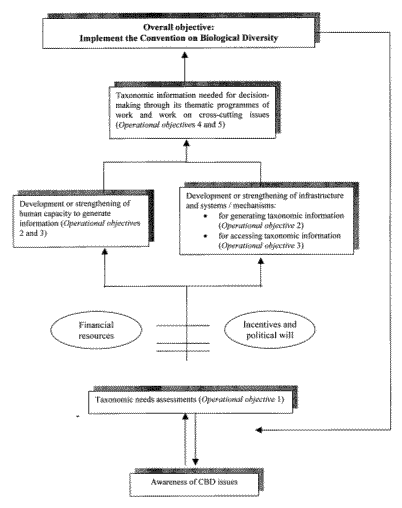
Diagram 1. Rationale and linkages between the five operational objectives of the programme of work
B. Taxonomic needs assessments at the national, regional and global levels
1. Operational objective 1 - Assess taxonomic needs and capacities at national, regional and global levels for the implementation of the Convention
1.1. Planned activity 1: Country-based taxonomic needs assessments and identification of priorities
- Rationale
In its decision IV/1 D, the Conference of the Parties recognized the need for each country to conduct a national taxonomic needs assessment. Furthermore, in decision V/9, the Conference of the Parties urged Parties, Governments and relevant organizations to undertake as a priority activity, assessments of national taxonomic capacity to identify and, where possible, quantify national and regional-level taxonomic impediments and needs. Assessments should be undertaken within the framework of undertaking the necessary planning to produce or update national biodiversity strategies and action plans under the Convention. To this end, the needs assessments will be required to clearly articulate how the lack of taxonomic information and/or capacity is an impediment to the implementation of national biodiversity strategies and action plans.
The Global Environment Facility (GEF) has been requested to support developing countries in undertaking the necessary needs assessments upon which to base action. (Decision III/5 provides additional guidance to the GEF to provide financial resources to developing countries for country-driven activities and programmes, targeting capacity-building, including taxonomy, to enable developing countries to develop and carry out an initial assessment for designing, implementing and monitoring programmes. Decision V/9 urges eligible Parties and consortia of eligible Parties to seek resources for the agreed priority actions, including needs assessments, through the financial mechanism.)
- Outputs
Each country would provide through their national biodiversity strategies and action plans, as well as through national reports to the Conference of the Parties, a report on their taxonomic capacity and priority needs, which would then be disseminated through the Convention's clearing-house mechanism.
- Timing
In its decision V/9, the Conference of the Parties urged Parties, Governments and relevant organizations to undertake this priority activity and, while not setting a specific timeframe, requested Parties to report on their actions to the Conference of the Parties at its sixth meeting (April 2002). As this is a fundamental part of the process of clearly identifying solutions to current lack of capacity it is very important for all countries to complete their needs assessment as soon as possible. Full or preliminary needs assessments should have been reported to the Executive Secretary by December 2001 for report to the Conference of the Parties at its sixth meeting, and final assessments by December 2002.
- Actors
National Governments, with the support of national and international organizations and institutions as needed, would take primary carriage of this activity. The Executive Secretary would compile completed assessments into an information paper for the seventh meeting of the Conference of the Parties.
- Mechanisms
The GEF was requested to provide funds for countries to undertake their needs assessments as part of a broader biodiversity information requirements process. An approach for the development of a standardized framework and instruments will facilitate compilation and comparison of information for baseline assessments and ongoing monitoring. As initial advice, a list of issues to be addressed has been developed by DIVERSITAS, and was provided to SBSTTA at its fourth meeting(19).
- Financial, human resources and other capacity requirements
National Governments will be required to fund this activity, potentially with additional support from donors.
- Pilot projects
The development of guidelines for the preparation of country-based taxonomic needs assessments, with specific advice on the integration within the overall implementation of national biodiversity strategies and action plans, is proposed as a pilot project to be undertaken by a relevant international organization or consortium of organizations.
1.2. Planned activity 2: Regional taxonomic needs assessments and identification of priorities
- Rationale
Ideally, country-level needs assessments provide the core input into the development of an assessment of regional capacity, the gaps in capacity across the region, and finally the setting of priority actions to fill the gaps. In many regions of the world it will be advantageous to pool resources and to act cooperatively in building taxonomic capacity to support conservation and decision-making. Regional activities in taxonomy have been supported by the Conference of the Parties in decisions III/10, IV/1 D and V/9, which all identify regional level activities as a major activity for the GTI. Decision III/10 endorsed recommendation II/2 of the SBSTTA, which sought to prioritize strengthening of regional and subregional networks for taxonomy, regional collaboration and regional and subregional training programmes. Decision IV/1 D stressed the urgent need for the further implementation of recommendation II/2 of the SBSTTA concerning capacity-building in all fields of taxonomy to assist in the implementation of the Convention, through the incorporation of targeted actions in its work plan, including promoting regional activities to set regional agendas. Decision V/9 also called for the identification of national and regional priority taxonomic information requirements. Furthermore, decision V/9 called for short-term activities, including regional meetings of scientists, managers and policy-makers to prioritize the most urgent global taxonomic needs and facilitate the formulation of specific regional and national projects to meet the needs identified.
- Outputs
Combined with best available information on national taxonomic needs (if possible national taxonomic needs assessments), regionally agreed plans of action, that provide identified priorities, will provide a clear focus for activities under the GTI. To develop such plans of action regional workshops will be held, under the general guidance of the Executive Secretary and the GTI coordination mechanism. The challenge of the workshops will be to blend academic advice and perspective with country needs to fulfil its obligations under the Convention.
- Timing
Two regional workshops, one in Africa and one in Central America, have taken place in 2001. Planning for a workshop in Asia, which will be held in 2002, has begun. Other meetings, including in South America, North America, Europe and a second one in Africa, are being discussed.
Ideally the GTI should endeavour to hold all regional workshops by the end of 2003, preferably by December 2003 as input to discussions at the seventh meeting of the Conference of the Parties.
- Actors
National governments, taxonomic institutions and global, regional and bilateral funding agencies are the main actors in the development of regional taxonomic needs assessments and priorities.
- Mechanisms
Existing or proposed regional biodiversity projects, as well as national biodiversity strategies and action plans, will provide a key mechanism for identification of the most urgent taxonomic information requirements at the regional level. The development of regional taxonomic needs assessments and priorities is best facilitated through regional workshops supported by prior research into country level capacity, compiled into regional syntheses. Active regional networks of taxonomists would be best placed to facilitate the compilation of national needs assessments into cohesive regional syntheses.
- Financial, human resources and other capacity requirements
The Government of Sweden, through the Swedish International Development Cooperation Agency (SIDA), has funded two regional workshops in 2001. Japan has agreed to partially fund the Asian workshop, but no sources of funding have been agreed at this stage for additional workshops.
- Pilot projects
Existing or proposed activities (or elements of activities) in some regions could be considered as pilot studies in the preparation of regional based taxonomic needs assessments, such as SABONET and SAFRINET in southern Africa, and BOZONET in Eastern Africa. However these existing activities need to be broadened to include all taxa, as well as input from the full range of biodiversity stakeholders needing taxonomic information. It is intended that the outputs from each regional workshop will be shared with all future workshops in order to facilitate clear and unambiguous, readily achievable pilot projects.
1.3. Planned activity 3: Global taxonomic needs assessment
- Rationale
Given the nature of taxonomic activity, and the lack of knowledge of key groups of organisms with global distributions of importance to humankind and biodiversity concerns, a global dimension is critical. It is widely recognized that generally there is very little data available on global diversity and distribution patterns, and where it does exist it is usually in non-standardized formats that may restrict its usefulness. Agreed global cooperation to finalize taxonomic work on globally important groups should involve both developed and developing countries, and will provide a major input into development of capacity-building initiatives. The global taxonomic needs assessment can result from a compilation of the regional taxonomic needs assessments, with activity to provide some agreed priority actions that can be undertaken at the global level.
- Outputs
A concise global plan of action using the outputs from the regional workshops, with the advice and support of international organizations and the GTI Coordination Mechanism.
- Timing
Progress towards production of a draft global plan of action on priority groups for study was reported to the Executive Secretary by December 2001, as input to discussions at the sixth meeting of the Conference of the Parties. A draft plan should be finalized by December 2002.
- Actors
National Governments, taxonomic institutions and global, regional and bilateral funding agencies are the main actors in the development of global taxonomic needs assessments and priorities. At the global level organisations such as, but not limited to, FAO, IUCN, UNEP-WCMC, UNESCO, the Ecosystem Conservation Group (ECG), and programmes such as BioNET INTERNATIONAL, DIVERSITAS, the Global Biodiversity Information Facility (GBIF), Species 2000, and Systematics Agenda 2000 International among others, will also have key roles to play.
- Mechanisms
A workshop focusing on global level taxonomic priorities should be organized, perhaps through the Ecosystem Conservation Group and GBIF. The taxonomic requirements of the Millennium Ecosystem Assessment should be a significant focus of setting global priorities. Such a workshop could be held in a developing country to highlight their special needs.
- Financial, human resources and other capacity requirements
Funding should be sought for this activity from Parties and key intergovernmental and non-governmental science based institutions interested in this activity.
- Pilot projects
Some pilot projects already exist that address some elements of this activity, such as ECOPORT, Species 2000, and the developing GBIF projects.
1.4. Planned activity 4: Public awareness and education
- Rationale
The need to raise awareness and to educate on the importance of taxonomy to underpin the Convention is critical to the success of the Global Taxonomy Initiative, and, within the programme of work, it is necessary to identify and target those groups who would benefit from increased awareness and education. This will include those working in and associated with work in areas of high biodiversity. In developing a public awareness and education package it will be necessary to balance the needs for formal education against the need for wider public awareness-raising. This activity will best be developed in conjunction with the activity under way following decision V/17 on education and public awareness, being carried out jointly by the Secretariat of the Convention on Biological Diversity and UNESCO. This joint activity will provide the focus for public awareness and education on taxonomy within the Convention through the development of a specific module on taxonomy. The module would test out techniques to develop regionally appropriate public awareness tools to help remove the taxonomic impediment, which would be refined in the later stages of the education and public awareness activity under the Convention, and should focus on educational materials for training to facilitate implementation of the Convention.
- Outputs
A package of materials and activities aimed at broadening public understanding of the importance of taxonomy in achieving the objectives of the Convention. Examples could include a brochure on the GTI, enhancement of Web pages, tutorials for education managers, popular scientific films, etc. A special focus on using the public awareness activity to acquire new levels of taxonomic information, through, inter alia, public involvement in parataxonomic activity, should form part of these initiatives.
- Timing
Activities will be planned in 2002, and further developed as appropriate.
- Actors
At the global level this activity could be jointly executed by the Convention Secretariat and UNESCO, but with prime carriage for this project by regional networks in conjunction with key taxonomic institutions that already have considerable experience in public-awareness programmes, and have indicated a willingness to participate in GTI activities.
- Mechanisms
Toolkits addressing particular taxonomic issues will be developed by the lead agencies for trial in selected regions of developing and developed countries. A key mechanism will involve participatory activity by local communities to strengthen the training and awareness raising for parataxonomists.
- Financial, human resources and other capacity requirements
This work element will be undertaken under the Global Initiative on Biodiversity Education and Public Awareness being elaborated by the Convention Secretariat and UNESCO, as called for in decision V/17 of the fifth meeting of the Conference of the Parties
- Pilot projects
Pilot projects should be developed within the joint public-awareness activity of the Convention Secretariat and UNESCO. The recent activities of Systematics Agenda 2000 International and BioNET-INTERNATIONAL in this area could also be expanded into pilot projects under the GTI.
C. Targeted actions
2. Operational objective 2 - Provide focus to help build and maintain the systems and infrastructure needed to obtain, collate and curate the biological specimens that are the basis for taxonomic knowledge.
2.1 Planned activity 5: Global and regional capacity-building to support access to and generation of taxonomic information
- Rationale
A significant impediment to greatly increasing the world's taxonomic base for the implementation of the Convention, and indeed more effectively utilizing the current taxonomic knowledge, lies in the limited capacity in many nations, and the decreasing taxonomic capacity world-wide. A key objective of the GTI should thus be to address the global and regional capacity-building needs, particularly of developing countries. There are two main areas of concern that need to be addressed simultaneously:
- Human capacity-building; and
- Infrastructure capacity-building.
Human capacity-building requires major increases in training programmes for taxonomists and parataxonomists throughout the world, for it is now well established that the "taxasphere", the world's global taxonomic expertise, is currently shrinking just at the time when we need it to advance our knowledge base rapidly. In addition to training, new employment opportunities should be created.
Maintaining and improving the existing taxonomic infrastructure can be achieved only through adequate funding, and new strategies are required to make optimal use of our past investments, while minimizing the costs and maximizing the benefits of future investments. In its decisions IV/1 D and V/9, the Conference of the Parties has urged countries to establish or consolidate regional and national taxonomic reference centres. There is a need to explore globally how the best possible outcomes for improving taxonomic capacity can be achieved. The GTI should address at the global and regional levels the coordination of collections infrastructure within countries and regions leading to improvements of long-term infrastructure regionally. Furthermore, such strategic planning should therefore encourage the creation or strengthening of national and regional taxonomic reference centres.
- Outputs
Increased human and institutional taxonomic capacity directed at meeting the needs of implementing the Convention.
- Timing
Activities need to begin immediately and be included in all work elements throughout the programme of work, with priority in covering the major upcoming work areas of the Convention in a timely manner, such that increases in capacity are achieved prior to the major element of work being undertaken.
- Actors
All Governments, international and national funding agencies, biosystematic institutions and taxonomic organizations have a role to play. Expert institutions in developed and developing countries and their professional staff with expertise in taxonomic groups around the world have much to offer in terms of capacity-building. Within planned activities 1 and 2 above, the development of national and regional taxonomic priorities, detailed regional priorities for capacity-building, both human and institutional, should be addressed.
- Mechanisms
In its decision III/10, the Conference of the Parties endorsed SBSTTA recommendation II/2, concerning capacity-building for taxonomy, in which the GEF was requested to provide funds for training programmes, strengthening reference collections, making information housed in collections available to countries of origin, producing and distributing taxonomic guides, strengthening infrastructure and disseminating taxonomic information through, inter alia, the clearing-house mechanism.
- Financial, human resources and other capacity requirements
The financial and human resources requirements of this activity are substantial. Funding needs may extend beyond possible contributions from individual Parties. However, through national and regional priority-setting, it will be possible to take a staged approach to undertaking the work required.
- Pilot projects
Consortia of major institutions should participate in the development of pilot projects to identify priority activities including capacity-building and development of information, through facilitating regional conferences to document existing holdings and by designating lead agencies in a collegiate process to maximize taxonomic effort across all groups.
SABONET and BioNET-INTERNATIONAL are two existing examples of projects that could be considered pilots of a regional and global approach respectively, that could be strengthened to provide greater capacity-building activities. The Smithsonian Institution has submitted a potential pilot project on neo-tropical moths that could also be considered for regional capacity-building.
2.2. Planned activity 6: Strengthening of existing networks for regional cooperation in taxonomy
- Rationale
To facilitate the development of cooperative programmes that increase taxonomic capacity in developing countries through fostering North-South and South-South collaboration.
Taxonomic capacity in terms of both human and institutional capacity varies widely between countries and regions. Although many developed countries have relatively comprehensive reference collections and a number of experts, no single country has a complete taxonomic inventory of national biodiversity, nor experts in all relevant taxonomic groups. In many cases, developing countries have very little or no physical reference collections of local biodiversity, nor trained personnel. Much of the existing reference material from developing countries resides in the expert institutions of the developed world, as do the experts in particular taxonomic groups. However, even in developed countries taxonomy has been under-resourced for many years, leading to a general decline in infrastructure, and a dearth of younger professionals.
In order to facilitate taxonomic capacity-building to underpin the Convention on Biological Diversity, cooperative programmes need to be established and/or strengthened between the countries with the expertise and reference materials and those without. A number of regional networks that facilitate cooperation between countries in building taxonomic capacity in certain taxonomic groups currently exist, e.g., SABONET, a cooperative network between 10 countries in southern Africa focused on flowering plants. The most comprehensive network currently in existence is that fostered by BioNET-INTERNATIONAL, the Global Network for Taxonomy. This initiative currently has seven extant subregional networks covering some 120 countries, with another four under development, and a further five planned. It is envisaged that these 16 networks will provide a global coverage of collaborative North-South and South-South networks for taxonomic capacity-building. The Global Network for Taxonomy is a donor-funded programme and the rate of network establishment is dependent on adequate continued funding. In establishing subregional cooperative networks, BioNET-INTERNATIONAL works through official governmental endorsement and comprehensive needs assessment activities to establish regional and national priorities.
- Outputs
A global network, ideally comprised of increasingly self-sufficient subregional networks, that covers all taxa. While the actual capacity-building initiatives should have a finite project-based life, ideally the networks themselves would remain in perpetuity once established and underpinned by member country Governments.
- Timing
Given that the lack of taxonomic capacity is a severe impediment to the abilities of countries to meet their obligations under the Convention on Biological Diversity, and that most taxonomic capacity can readily be shared and utilized across institutional and national boundaries, it follows that building of taxonomic capacity can best be facilitated by subregional cooperative networks and global partnerships. Therefore plans for strengthening and/or building of regional networks should at least be in place by December 2002, particularly ensuring that existing relevant networks become fully operational across the full spectrum of taxonomic groups. Strategies should be in place to complete the global coverage by December 2002. In addition, over the next five years, taxonomic institutions should look for opportunities to build capacity-development partnerships, particularly between institutions in developed and developing countries.
- Actors
Existing regional and subregional networks, with assistance from organizations such as BioNet INTERNATIONAL and UNESCO, and with regional and extra-regional partner organizations and networks, could be utilized to build a more complete coverage. These networks should play the role of implementing mechanisms, such that the GTI has access to, and interaction with all relevant taxonomic institutions within a subregion.
To facilitate this development the expert institutions of the developed world that house the relevant subregional taxonomic reference materials and information, and the professional staff with expertise in taxonomic groups from these subregions, should be actively involved.
- Mechanisms
An agreed strategy on strengthening and building networks to ensure global coverage both geographically and by taxon group is a huge undertaking. Different countries and regions have different levels of capacity, and different taxonomic needs and priorities. Existing subregional networks can serve as implementing mechanisms for improving taxonomic capacity in developing countries. These existing networks need to be broadened in scope, and the establishment of the remaining networks currently under development or in the planning stages needs to be undertaken as soon as possible. This will require completion of needs assessments and priority setting for each network, where these do not exist or need updating and/or expansion. Regional taxonomic reference centres that house network reference materials and host the network's Information and Communications System provide a useful mechanism to prevent duplication of infrastructure, but they require sound means of communication to provide all countries involved with equal access to the information. As part of this, improved access by taxonomists of all Parties to the taxonomic reference material itself, particularly type specimens and material presently held outside countries of origin, is important in developing work within the GTI.
- Financial, human resources and other capacity requirements
Funding will be required to support the work programmes of the individual networks, but the countries themselves need to endorse the operations and specifically the human resource and institutional costs of maintaining, operating and developing such collaborative networks. These costs will depend on the status of each country's capacity and the scope of the work programmes. Such collaborative networks can be cost-saving mechanisms in certain taxonomic groups/areas because of the ‘economies of scale' produced by the sharing of taxonomic capacity, and reduce the need for each country to attempt to build the needed capacity individually.
Ideally the networks should have a dedicated full-time secretariat, but depending on needs, they can be operated on a part-time basis by staff already employed within relevant institutions.
Capacity-building in taxonomy necessarily includes the infrastructure capacity to house reference material, together with all of the reference material and equipment to enable identifications.
- Pilot projects
Three pilot projects can be proposed. The first pilot project could work with one of the existing BioNET-INTERNATIONAL networks and evaluate the current structure, mechanisms and operations of the network to assess its ability to expand to fully meet the objectives of the GTI in underpinning the Convention on Biological Diversity. Currently, many of the existing BioNET-INTERNATIONAL networks are focused on micro-organisms and invertebrates, often with an agricultural orientation, and as such would need to be expanded to include all taxon groups and relevant institutions. The second pilot project could be undertaken in partnership with BioNET-INTERNATIONAL in the establishment of new networks designed to meet the requirements of the Convention. The third project is currently under formulation under the name BOZONET and is an eastern African taxonomic capacity-building project for botany and zoology.
3. Operational objective 3 -Facilitate an improved and effective infrastructure/system for access to taxonomic information; with priority on ensuring that countries of origin gain access to information concerning elements of their biodiversity
3.1. Planned activity 7: Develop a coordinated global taxonomy information system
- Rationale
Existing taxonomic information is widely scattered and not centrally available. This activity will firstly identify the current status of major taxonomic information systems in particular their major foci, and plan a coordinated approach to the development of a global taxonomic information infrastructure, as the major element of the GTI under the Convention's clearing-house mechanism.
- Outputs
An agreed strategy to develop information services that optimizes access to taxonomic information systems world-wide, in appropriate formats. This strategy would also include common standards for exchange of data and consideration of intellectual property rights.
- Timing
Work took place in 2001 and information was provided as an input to discussions by the sixth meeting of the Conference of the Parties; the activity will be further developed within a five-year framework and reports provided to SBSTTA as appropriate.
- Actors
Actors will include ECOPORT, GBIF, Species 2000, the Integrated Taxonomic Information System (ITIS), Tree of Life, NABIN, ISIS, BIN21, BCIS, BioNET INTERNATIONAL, as well as large-scale biosystematics research institutions and other stakeholders of taxonomic information, in collaboration with the clearing-house mechanism of the Convention on Biological Diversity.
- Mechanisms
Assessment of the objectives of each system, and their prospective target audience, as a means to evaluate the fulfilment of the needs of Parties in accessing taxonomic information required under the Convention on Biological Diversity. The existing International Plant Names Index (IPNI) and the Global Plant Checklist (IOPI) among others could provide useful models for developing a global strategy.
- Financial, human resources and other capacity requirements
Sources of funding need to be identified.
- Pilot projects
As a precursor to developing pilot projects it is proposed to hold a workshop that brings together stakeholders of all the existing global and major regional biodiversity information systems to identify overlaps, synergies, and gaps in order to develop a coordinated global strategy for harmonizing the existing systems.
Several pilot projects are already under way including SABONET and Species Analyst, and several potential projects have been put forward in recent international taxonomic meetings, and submitted to the GTI as potential pilot projects, such as GLOBIS, a butterfly information system for the world, and the World Termite Database.
4. Operational objective 4 - Within the major thematic work programmes of the Convention include key taxonomic objectives to generate information needed for decision-making in conservation and sustainable use of biological diversity and its components
It is recognized that taxonomy is fundamental to the thematic areas of the Convention on Biological Diversity through discovery, identification, and documentation of biological diversity. Because there are inadequate global taxonomic resources to meet all demands, it is important to indicate taxonomic priorities within each of the thematic areas of the Convention on Biological Diversity. Such priorities should recognize indigenous knowledge systems where appropriate permission has been obtained. Within existing thematic work programmes, workshops should be conducted in appropriate regions, involving taxonomic experts to identify key taxa for inventory and monitoring programmes. Sufficient flexibility should be maintained in order to respond to possible future modifications of priorities.
4.1. Planned activity 8: Forest biological diversity
- Rationale
In the annex to decision IV/7, on forest biological diversity, containing the work programme on forest biological diversity, under programme element 3 on criteria and indicators for forest biological diversity, the following activity is identified: Taxonomic studies and inventories at the national level, which provide for a basic assessment of forest biological diversity.
- Outputs
An increased knowledge of the species composition of forests, through national taxonomic studies and inventories. Using this increased knowledge base facilitates selection of criteria and indicators for forest biological diversity and may guide in the selection of sites to be protected and in the valuation of resources.
- Timing
As this activity is carried out at the national level there will be variable timetables globally. The second round of national reports for the implementation of the Convention was due in May 2001 and provided an opportunity for countries to report on taxonomic studies and inventories carried out at the national level that provide for a basic assessment of forest biological diversity.
- Actors
National governments and institutions will have the main responsibility, with possible advice from a collaborative partnership of forest members on methodologies for the development of appropriate criteria and indicators. The active involvement of international organizations such as the Center for International Forestry Research (CIFOR), the International Centre for Research in Agroforestry (ICRAF), and the United Nations Forum on Forests (UNFF) will provide useful links between existing initiatives.
- Mechanisms
In decision IV/7, the Conference of the Parties agreed that countries would review specific indicators of forest biological diversity derived by the major international processes related to sustainable forest management. Depending on the selection of the criteria and indicators chosen, additional taxonomic studies and inventories will then be required.
- Financial, human resources and other capacity requirements
These requirements will be country-dependent, and resource requirements and sources will vary.
- Pilot projects
To facilitate the implementation of one element of the programme of work on forest biological diversity, a pilot project is proposed in the selection of indicators for below-ground diversity in forests in each of the three forest biomes: tropical, temperate, boreal. While there is a need to continue developing knowledge in many components of forest ecosystems, the least known, and highest priority, is the below-ground biological diversity. It is understood that it plays a major role in contributing to the development and the health of the above-ground biological diversity by, for instance, processing nutrients or minerals that are then made available to, and assimilated by, plant biodiversity.
4.2. Planned activity 9: Marine and coastal biological diversity
- Rationale
Two major elements of taxonomic work within marine and coastal ecosystems can be considered as high priority for achieving the Convention's objectives in marine and coastal systems, namely ballast water organisms, and key organisms for monitoring the health of mangrove systems through their invertebrate fauna. The ballast water organisms sub-element will require, inter alia, a focus on pelagic juvenile stages of benthic organisms. The second element focuses on mangroves, which are among the world's most rapidly changing systems. Within the marine and coastal biodiversity programme of work there is a need to develop taxonomic support for baseline monitoring of invertebrate fauna in mangrove systems.
- Outputs
Identification aids for quarantine and other officials to identify and monitor the introduction of novel marine organisms.
Taxonomic guides to key invertebrate organisms in mangrove systems to aid management of the continuum from natural to disturbed mangrove ecosystems. Taxonomic data will also assist in selecting sites for protected areas and for resource valuation.
- Timing
Within the timeframe of the GloBallast programme, produce basic guides for the identification of major organism groups found in ballast water at major sources.
Within the next three years, develop taxonomic guides to the identification of mangrove invertebrate fauna that can be used as indicators of habitat change.
- Actors
The International Maritime Organization (IMO) should take the lead role in the taxonomic work in ballast water, under their GloBallast work programme, which would then be integrated with the activities foreseen under the invasive alien species work of the Convention on Biological Diversity, and the GTI programme of work.
International conventions, in particular the Ramsar Convention on Wetlands of International Importance especially as Waterfowl Habitat, and taxonomic institutions with expertise in coastal invertebrates should play a key role in conjunction with national institutions from Parties with significant extent of mangrove ecosystems under threat, in the implementation of the necessary taxonomic work.
- Mechanisms
The IMO GloBallast work programme could include a taxonomic component for the identification of marine pelagic taxa, including those with adult benthic forms, which will form a key element of the GTI in the marine environment. The International Society for Mangrove Ecology (ISME) could facilitate the development of the work element on mangrove invertebrate fauna, including training workshops of key personnel from taxonomic institutions in tropical areas. Three workshops, one in Africa, one in the neotropics and one in Asia have been suggested and are in preparation for 2001 with support from UNESCO. The International Coral Reef Initiative (ICRI) and its network can assist with regard to coral reefs.
- Financial, human resources and other capacity requirements
The IMO GloBallast programme could provide the appropriate resources for a pilot project involving six developing countries.
Funding support is required for the three capacity-building workshops as well as appropriate infrastructure support for the mangrove invertebrate taxonomy and production of guides and ICRI work.
- Pilot projects
The GloBallast programme is a pilot project under the IMO, with direct relevance to the invasive alien species and GTI programmes of work.
A pilot project focused in south-east Asia on mangrove invertebrates, particularly involving Malaysia, Indonesia and Philippines, could be developed in conjunction with the International Center for Living Aquatic Resources Management (ICLARM) and ISME.
4.3 Planned activity 10: Dry and sub-humid lands biodiversity
- Rationale
Decision V/23 on consideration of options for conservation and sustainable use of biological diversity in dryland, Mediterranean, arid, semi-arid, grassland and savannah ecosystems establishes a programme of work, including, inter alia, assessment of the status and trends, identification of specific areas within dry and sub-humid lands of particular value for biological diversity and/or under particular threat, and the further development of indicators. Under each of these activities targeted actions on furthering the knowledge base on the organisms that maintain the crucial soil crust should be developed at national and regional levels, as well as the need for greater knowledge of the micro-organisms in nutrient cycling, and increased taxonomic information of pests and diseases.
Correct identification of indicator taxa, such as crust-forming lichens, often requires special identification aids and techniques, and the development of such tools is necessary for increasing the capacity of rangeland managers to understand their function in maintaining dryland ecosystems. In many parts of the world, there is a need to increase taxonomic capacity to identify the lichens, and to then develop identification tools. It is important that such identification tools be designed in such a way that they can be used by rangeland managers to help in identification of key organisms.
- Outputs
Enhanced understanding among agricultural and rangeland managers of lichens as key indicators warning of the advance of soil degradation. This will usually take the form of loss of particular species from the system. Taxonomic work will need to develop easy-to-use identikits for key soil lichens, algae, soil invertebrates, pest insects and other herbivores, and other taxa that will be the harbingers of change.
- Timing
By the seventh meeting of the Conference of the Parties, have developed identification aids in consultation with appropriate national taxonomy and management agencies.
- Actors
The Convention to Combat Desertification (CCD) and other environmental conventions and their relevant collaborators, international agencies (including International Agriculture Research Centres (IARCs)), rangeland managers and national Governments.
- Mechanisms
Cooperation with the CCD and other key players among international organizations
- Financial, human resources and other capacity requirements
To facilitate global and regional cooperation and synergy in this work, a project which could attract funding from the IARCs, in conjunction with FAO, can be proposed.
- Pilot projects
A pilot project could be developed among CCD, FAO and UNEP to assess different biological and biochemical indicators of land degradation. This project would require input from a range of taxonomic experts, including algologists and lichenologists. Input would also be required from soil scientists, who can link abiotic information with the taxonomic information obtained. Results can be distilled to a simple identikit system that will allow local managers to identify key species and determine the health of their arid/semi-arid system.
4.4 Planned activity 11: Inland waters biological diversity
- Rationale
As in all other major ecosystems the current status of taxonomic knowledge in inland waters is varied both geographically, and according to the major taxon groups. For the purposes of the GTI targeted activities in rapidly increasing worldwide knowledge of freshwater fish and invertebrates are proposed as high priority.
- Outputs
A series of regional guides to freshwater fish and invertebrates (including adult terrestrial forms where appropriate) as an input to ecosystem monitoring for river and lake health.
- Timing
Produce field-usable regional guides within two years for both professional and public use.
- Actors
National agencies and taxonomic institutions, especially museums, should play a principal role in the implementation of this activity. International support and coordination could be provided through the UNESCO key science activity "Water and Ecosystems". Parataxonomists, in the form of interested members of the public and school students in a number of countries, have been using the technique to monitor aquatic health. This is an area that could be built upon, and maybe also linked to planned activity 11.
- Mechanisms
Changes in the species compositions and abundance of macro-invertebrates in freshwater systems are now being studied worldwide as part of approaches to monitoring of ecosystem health. A number of key potential partners are possible for this activity, including from developed and developing country perspectives. The Scientific and Technical Review Panel of the Ramsar Convention on Wetlands of International Importance especially as Waterfowl Habitat should also be involved in this project to provide specialist expertise, and a focus on the concept of using taxonomy to help understand ecological change.
- Financial, human resources and other capacity requirements
There is opportunity to build on existing projects here, or assist regional collaboration between existing projects, which would contribute to the implementation of the GTI while simultaneously improving monitoring of ecosystem health.
4.5 Planned activity 12: Agricultural biological diversity
- Rationale
Within the programme of work on agricultural biological diversity, several areas require taxonomic capacity in order to deliver fully on their objectives. The need for taxonomy ranges from classical taxonomy of the species living in agricultural ecosystems, to the taxonomy of wild relatives of agriculturally important species, to access to existing taxonomic information including basic knowledge on the functional relationships between organisms often recorded by taxonomists.
The value of training and knowledge-sharing among researchers, extension workers, farmers and indigenous peoples is highlighted in decision V/5 of the Conference of the Parties to the Convention on Biological Diversity. Within the agricultural biodiversity work programme specific taxonomy-related activities are envisaged in the following subject areas: pollinators; soil and other below-ground biodiversity, to support agricultural production systems, especially in nutrient cycling; and natural enemies of pests and diseases.
As the agricultural biological diversity work programme develops, significant taxonomic activities will need to be integrated within the proposals for work.
- Outputs
Outputs would include: easy-to-use keys to families, genera and species of pollinators; automated identification systems for pollinators; development of standard methods for identification of soil biodiversity to different taxonomic levels; increased knowledge of soil biodiversity to aid in the identification of indicators of the "health" of below-ground biological diversity; and taxonomic training for farmers and ecosystem managers.
- Timing
Within the agricultural biodiversity work programme the taxonomy related activities are part of the timeframe for the development of the overall activity. Current timeframes are as follows:
- Pollinators - In order to initiate the process of implementation of the International Initiative for the Conservation and Sustainable Use of Pollinators a planning meeting took place at the FAO in late 2000. A plan of action was adopted at the sixth meeting of the Conference of the Parties;
- Soil biota - Ongoing efforts by Governments and relevant organizations will develop projects with appropriate timing;
- Pest and disease regulation organisms - Proposals for activities may be developed by countries and relevant organizations as determined in the programme of work on agrobiodiversity.
- Actors
FAO has been invited by the Conference of the Parties in decision V/5 to lead the International Pollinators Initiative (IPI), and will prepare a proposal for the development of the IPI for the seventh meeting of SBSTTA.
Parties should make contributions on soil biota and organisms involved in pest and disease regulation. In addition, the tropical soil biology and fertility (TSBF) programme hosted by UNESCO in Nairobi is the proposed implementing agency for a full-sized GEF project, which includes major taxonomic components for assessing below-ground biodiversity. Also, the Global Integrated Pest Management (IPM) Facility, based in Rome, which is a programme co-sponsored by FAO, UNEP, UNDP and the World Bank, may contribute as an organisation involved in pest and disease regulation.
- Mechanisms
The International Pollinators Initiative (IPI) will contain a major taxonomic component, and the project is currently under development.
A major taxonomic element needs to be built into all current and proposed projects dealing with the sustainable use or conservation of agricultural and non-agricultural lands, if we are to advance our knowledge base on the functional aspects of maintaining ecosystem processes.
As concerns organisms involved in pest and disease regulation, a scoping exercise should be undertaken to determine where the limitations exist in terms of taxonomic information, from basic alpha-taxonomy of pests and natural enemies, to how the information is presented and distributed. This work can be carried out by farmers' networks and research institutions, including the IARC system.
- Financial, human resources and other capacity requirements
All three elements require resources to be identified within existing and new projects, as well as additional resources to be made available to increase technical capacity in most countries of the world.
- Pilot projects
A major UNEP project entitled "Conservation and sustainable management of below-ground biodiversity" in seven countries is currently under assessment by UNEP. A Canadian report "Soil biodiversity: issues for Canadian agriculture" is being prepared and may be a suitable pilot. A pilot project on termites submitted by the Smithsonian Institution could also be considered.
4.6 Planned activity 13: Mountain biological diversity
Development of this activity will be undertaken following discussion of this thematic work area at the seventh meeting of the Conference of the Parties. The GTI Coordination Mechanism could play an important role in proactively defining taxonomic needs related to this planned thematic activity.
5. Operational objective 5 - Within the work on cross-cutting issues of the Convention include key taxonomic objectives to generate information needed for decision-making in conservation and sustainable use of biological diversity and its components.
5.1. Planned activity 14: Access and benefit-sharing
- Rationale
The Conference of the Parties, in its decision V/26, identified "Assessment and inventory of biological resources as well as information management" as key capacity-building needs with respect to access and benefit-sharing arrangements. Indeed, the inventory of biological resources could provide useful information in view of the elaboration of measures regarding access to genetic resources and the equitable sharing of benefits arising from their exploitation. In order to carry out this inventory, increased capacity is often needed at the country level. The primary goal of the GTI is to assist countries in carrying out this inventory in a timely and efficient manner. A major element in increasing capacity to properly inventory and access biological resource information is effective information management. Therefore a key element of the GTI must be the development of appropriate information-technology tools to allow access to existing data, as well as to provide efficient entry of new information generated from any increased knowledge.
The more each country can develop its capacity to properly inventory, collect, classify, and then commercialize its biological resources, the greater will be the return of benefits to that country. These four elements (inventory, collection, classification, commercialization) can be seen as a hierarchy of increasing capacity. The GTI will concentrate on developing capacity in the collection and classification of biodiversity. The GTI should include projects designed to develop capacity in collecting and maintaining biological collections, as well as the proper classification and knowledge of the biological resources. Taxonomic information, in particular at the genetic level, will be critical in tracing the origin of resources and living modified organisms (LMOs).
Increasing access by countries of origin to existing information on biological resources held elsewhere has also been highlighted as a major element of the Global Taxonomy Initiative. In decision V/26, the Conference of the Parties urged countries to adopt measures that are supportive of efforts to facilitate access to genetic resources for scientific, commercial and other uses, and associated knowledge, innovations and practices of indigenous and local communities embodying traditional lifestyles relevant to the conservation and sustainable use of biological diversity.
The first step in facilitating access is provision of information, and the Parties have agreed in decision IV/1 D to a series of actions that would increase access to information world-wide. Operational objective 3 of the present programme of work sets out a plan to begin to address this issue.
- Outputs
Interactive catalogues of material available, linked to taxonomic collections in herbaria and museums. Taxonomic support, including at the molecular level, to provide clear identification of specimens in the ex situ collections, especially in developing countries, is needed.
A series of country-driven projects could be carried out, combining the development of basic taxonomic capacity and an improved information base on biological resources.
These would assist in developing better linkages between existing initiatives that provide information electronically on genetic resources, as well as new projects to improve the access to, and range of, publicly available taxonomic information. In turn, a basis for the commercialization of components of that biological diversity would be provided.
- Timing
Progress in global networking between countries and taxonomic institutions holding significant ex situ collections should be accelerated within a five-year timeframe.
Development of pilot projects should occur as soon as possible.
- Actors
National (and international) culture collections, including microbial collections. The IARC system, especially the Consultative Group on International Agricultural Research (CGIAR), should be involved to select priorities for needed taxonomic effort.
Taxonomic institutions in many countries contain significant holdings of ex situ materials from other countries, and in particular from developing countries. Botanical gardens hold both dead and live material that may be of considerable interest to the country of origin of that material, and may also develop new or improved conservation techniques that could aid countries of origin in their conservation and sustainable use efforts.
The FAO Commission on Genetic Resources for Food and Agriculture could play a key partnership role.
The Global Biodiversity Information Facility (GBIF) may be usefully involved in this activity.
- Mechanisms
One of the first most important measures any country can take to encourage the sustainable use of its resources and ensure proper sharing of benefits derived from their exploitation is through developing knowledge regarding their own biodiversity, and in particular full cataloguing of its diversity. Through acknowledging the importance of developing taxonomic capacity and adopting a series of suggested actions and priority activities (in its decisions IV/1 D and V/9), the Conference of the Parties has clearly indicated to Parties, Governments and relevant organizations the major work that needs to be undertaken to build taxonomic capacity within countries.
The basic mechanism for undertaking these actions and activities is through country-driven projects at the national, regional and subregional levels, which are to be implemented with the assistance of developed and developing country institutions that house ex situ collections (i.e. herbaria, botanical gardens, museums and zoos), and the financial mechanism. These country-driven projects need to be developed to show clearly how the development of basic taxonomic capacity leads to an improved knowledge base and understanding of the biological resources held by the country, which can then be used to attract the necessary investment in the full range of commercial uses of components of that biological diversity.
Achieving tangible results in the short term will require the promotion of a series of projects that have existing support from within both developing and developed world institutions and that clearly lead to a conservation or sustainable use outcome. A major action plan should be developed with FAO, IARCs (especially CGIAR) and BioNET-INTERNATIONAL as the key intergovernmental organizations and non-governmental organizations, among others.
- Financial, human resources and other capacity requirements
Capacity-building of taxonomic institutions is a costly and ongoing matter, and strategic input to help conservation and sustainable use efforts significantly must be based on those areas where useful outcomes can be demonstrated in the short to medium term. It is to be hoped that demonstrating benefit may then lead to further investment in infrastructure support and development.
New resources are needed to initiate activities, although existing resources within key organizations may be able to be mobilized for the development of an action plan.
5.2 Planned activity 15: Invasive alien species
Development of this activity will be undertaken based on priorities identified through GISP phase I, the review of the status of invasive alien species and of ongoing measures addressing invasive alien species under way within the Convention on Biological Diversity, and the contents of the decisions taken by the sixth meeting of the Conference of the Parties to the Convention on Biological Diversity regarding invasive alien species(20).
5.3 Planned activity 16: Support in implementation of Article 8(j)
- Rationale
The Conference of the Parties has acknowledged that traditional biodiversity-related knowledge (TBRK) has the potential to inform the activities of the Convention on Biological Diversity. Before it can do so, indigenous and local communities require protection of their intellectual property in any collaborative efforts aimed at meshing traditional knowledge and science. Given that the GTI has the potential to make traditional biodiversity-related knowledge more accessible to a wide range of users, due regard must be given to the concerns raised by indigenous and local communities regarding the right to preserve, protect and manage traditional biodiversity-related knowledge, particularly traditional taxonomic knowledge.
In its decision V/16, the Conference of the Parties endorsed a programme of work to implement Article 8(j) based on a number of principles, including full and effective participation of indigenous and local communities, the valuing of traditional knowledge, acknowledgment of spiritual and cultural values and the requirement for prior informed consent from traditional knowledge holders.
Paragraph 17 of that decision requests the Parties to support the development of registers of traditional knowledge, innovations and practices of indigenous and local communities through participatory programmes and consultations with indigenous and local communities, taking into account strengthening legislation, customary practices and traditional systems of resources management, such as the protection of traditional knowledge against unauthorized use.
A number of tasks in the programme of work for the implementation of Article 8(j) have a direct bearing on the proposed activities of the GTI, in particular tasks 1, 2 and 7 in phase 1 and tasks 6, 10, 13, and 16 in phase 2 (decision V/16).
Traditional knowledge systems include taxonomic information, which if used in combination with Linnaean taxonomies could support the GTI. Access to and use of traditional knowledge must have the prior informed consent of the holders of that knowledge and be based on mutually agreed terms. When this has occurred, comparison of indigenous taxonomies and Linnaean taxonomies in different regions could be made to provide general principles to assist in the conservation and sustainable use of elements of biodiversity in different ecosystems.
- Outputs
Regional and subregional guides based on ethical research practices and developed with full and effective participation of indigenous and local communities. These guides could highlight the similarities and differences between the two taxonomies and may be in the form of catalogues and species lists, or be more targeted resource material that provides interpretation information for a wide variety of environmental managers, in particular protected area and conservation managers.
- Timing
Preparation of guides to be completed as part of implementation activities under Article 8(j).
- Actors
National and subnational governments, indigenous and local groups, indigenous research centres and indigenous non-governmental organizations should take the lead in this work element. Potentially the GBIF could play a lead role in providing a global role in information distribution. Some international and national institutions already hold significant information and have active programs in compiling indigenous and local taxonomies. These institutions, with the full and effective participation of indigenous and local communities, should be encouraged through additional "catalytic" funding to ensure that their research practices are based on agreement between parties and the principle of prior informed assent.
- Mechanisms
The Convention on Biological Diversity, UNESCO, the International Social Science Council (ISSC) and the International Council of Scientific Unions (ICSU) offer the appropriate platform to develop with the full and effective participation of indigenous and local communities suitable plans of work leading to project development. The Ad Hoc Open-ended Working Group on Article 8(j) should play a key role in advising on the development of projects.
- Financial, human resources and other capacity requirements
New resources are required to initiate this activity.
5.4 Planned activity 17: Support for ecosystem approach and work under the Convention on Biological Diversity on assessment including impact assessments, monitoring and indicators
- Rationale
Under the ecosystem approach, a key activity will be the Millennium Ecosystem Assessment. The Millennium Ecosystem Assessment will require considerable scientific effort for the characterization of ecosystems, including better data on key species that comprise ecosystems and their role in maintaining ecosystem processes. In many regions taxonomic knowledge needed to fulfil these efforts is not available, which will therefore require specific activities to be undertaken (created under the GTI). The Millennium Ecosystem Assessment seeks policy-relevant information; the GTI is a policy response to a recognized impediment, or knowledge block, in our system of biodiversity understanding. The GTI seeks to facilitate gathering of the pertinent species information that would be used to characterize ecosystems, including those that help to illustrate the value of goods and services flowing from ecosystems.
The Millennium Ecosystem Assessment will be required to report on issues such as patterns of species and ecosystem diversity - the activities of the GTI in facilitating better knowledge of the species and their distribution will help provide this information. All information fed into the Millennium Ecosystem Assessment will need appropriate geo-referencing - which is a key plank for all activities envisaged under the GTI. The GTI will also be focusing on taxonomic activity in areas of relevance to the Convention, especially the key ecosystem themes. Thus the products of the GTI can complement the Millennium Ecosystem Assessment activity in thematic ecosystems, which in turn may illustrate the extent of removal of the taxonomic impediment - providing a positive feedback process.
The GTI also has relevance to the suite of environmental conventions associated with the Convention on Biological Diversity (e.g., the Convention on the Conservation of Migratory Species of Wild Animals, the Convention on International Trade in Endangered Species of Wild Fauna and Flora (CITES), and the Convention on Desertification), and to the Commission on Sustainable Development, all of which have a direct interest in the outcomes of the Millennium Ecosystem Assessment. There is scope for linking envisaged work programmes under the Millennium Ecosystem Assessment with the key action areas under the GTI.
- Outputs
Production of taxonomic overviews to help guide the Millennium Ecosystem Assessment to focus on key areas and issues of importance. These overviews can be compiled from work under the other operational objectives, but may need special focus for the global ecosystem context of the Millennium Ecosystem Assessment.
- Timing
To be linked with the Millennium Ecosystem Assessment development and programme.
- Actors
The Millennium Ecosystem Assessment advisory mechanisms, and the UNEP World Conservation Monitoring Centre (WCMC) and UNESCO as key synthesizers.
- Mechanisms
The Convention's cross-cutting issue of assessments and the programme of work on indicators of biological diversity include a number of programme elements where input from the GTI would be required, including the development of a menu of indicators in thematic areas and development of methodology sheets, guidelines and training for supporting the development of national monitoring and indicator programmes. Specific input required from the GTI would be in the identification, development and testing of suitable indicators, and priority taxonomic information required as input to scientific assessments.
- Financial, human resources and other capacity requirements
The development of financial and human resource requirements will need to be undertaken within the development of specific Millennium Ecosystem Assessment project proposals, as well as through agreed activities in indicator development.
5.5. Planned activity 18: Protected areas
Development of this activity will be undertaken following discussion of this cross-cutting work area. The GTI Coordination Mechanism could play an important role in proactively defining taxonomic needs related to this planned activity for the ninth meeting of SBSTTA, prior to the seventh meeting of the Conference of the Parties.
III. MONITORING AND ASSESSMENT OF THE GTI
The GTI Coordination Mechanism has been tasked to assist the Executive Secretary to facilitate international cooperation and to coordinate activities on matters pertaining to the implementation and development of the GTI, and in this role will provide overall monitoring and assessment of the activities undertaken as part of the GTI.
The Parties will provide regular updates on activities under the GTI through the national reporting process under the Convention on Biological Diversity.
Reports on the progress of implementing the GTI programme of work will be made by the Executive Secretary to SBSTTA to enable review of progress by that body.
(16)
UNEP/CBD/SBSTTA/6/INF/4.
(17)
UNEP/CBD/COP/6/INF/23.
(18) See
decision VI/26.
(19)
UNEP/CBD/SBSTTA/4/INF/7.
(20) See
decision VI/23.
