en
|
fr
English
|
Français
Sign up for an account
|
Sign In
The Convention
About the Convention
History of the Convention
Convention Text
List of Parties
Decisions
Global Biodiversity Outlook (GBO 3)
Convention Protocols
Cartagena Protocol on Biosafety
Nagoya Protocol on Access and Benefit-Sharing
Convention Bodies
Conference of the Parties (COP)
Subsidiary Body on Scientific, Technical and Technological Advice (SBSTTA)
Working Group on the Review of Implementation (WGRI)
Intergovernmental Committee for the Nagoya Protocol (ICNP)
Working Group on Article 8(j)
Working Group on Protected Areas
Strategic Plan for Biodiversity 2011-2020
Key Elements
Aichi Biodiversity Targets
Implementation
United Nations Decade on Biodiversity 2011-2020
Mechanisms for Implementation
National Biodiversity Strategies & Action Plans
National Reports
Financial Resources & Mechanism
LifeWeb for Financing Protected Areas
Clearing-House Mechanism (CHM)
Cooperation & Partnerships
South-South Cooperation
Consortium of Scientific Partners
Rio Conventions
Biodiversity-related Conventions
Japan Biodiversity Fund
Partnership Agreements
Cartagena Protocol
The Cartagena Protocol
What's new
About the Protocol
Text of the Cartagena Protocol
Strategic Plan
Key Protocol Issues
Assessment and Review
Capacity Building
Compliance
Financial Mechanism
Handling, Transport, Packaging and Identification
Information sharing
Liability and Redress
Monitoring and Reporting
Public Awareness and Participation
Risk Assessment
Risk Management
Roster of Experts
Socio-economic Considerations
Parties
List of Parties
Becoming a Party
National Contacts
National Reports
Status of Contributions
COP-MOP (Governing Body)
COP-MOP Bureau
COP-MOP Meetings
COP-MOP Decisions
Activities and Documentation
Meetings and Documents
Notifications
Reports of the Executive Secretary
Resources
The Biosafety Clearing-House
Frequently Asked Questions
Media and Outreach
A video on the Cartagena Protocol
Search the BIRC
Publications
Protocols and decisions
Fact Sheets and Banners
Newsletter
Biosafety Technical Series
Other Publications
Nagoya – Kuala Lumpur Supplementary Protocol on Liability and Redress
The Biosafety Clearing-House (BCH)
Nagoya Protocol
Programmes
Thematic Programmes
Agricultural Biodiversity
Dry and Sub-humid Land Biodiversity
Forest Biodiversity
Inland Waters Biodiversity
Island Biodiversity
Marine and Coastal Biodiversity
Mountain Biodiversity
Major Groups
Local Authorities
Parliamentarians
Business
Universities and the Scientific Community
Children & Youth
The Green Wave for Schools
Non-Governmental Organizations (NGOs)
Cross-Cutting Issues
Biodiversity for Development
Climate Change and Biodiversity
Communication, Education and Public Awareness
Economics, Trade and Incentive Measures
Ecosystem Approach
Gender and Biodiversity
Global Strategy for Plant Conservation
Global Taxonomy Initiative
Health & Biodiversity
Impact Assessment
Identification, Monitoring, Indicators and Assessments
Invasive Alien Species
Liability and Redress - Article 14.2
Protected Areas
Sustainable Use of Biodiversity
Technology Transfer and Cooperation
Tourism and Biodiversity
Traditional Knowledge, Innovations and Practices - Article 8(j)
New & Emerging Issues
Information
News and Communications
CBD Announcements
Statements
Notifications
News Headlines on Biodiversity
Press Releases
RSS Feeds
Twitter
Facebook
Discussion Forums
National Information
Country Profiles
List of Parties
Lists of National Focal Points
National Biodiversity Strategies and Action Plans (NBSAPs)
National Reports
Status of Contributions
Multimedia
Photo Gallery
Video Gallery
YouTube
General References
Decisions
Recommendations
Meetings
Library and Documents
Principles, Guidelines and Tools
Resources for Negotiators
ECOLEX - A Gateway to Biodiversity-Related Law
Case Studies
Related Websites
Partnership Agreements
Thematic Databases
Ecosystem Approach Sourcebook
Database on Climate Change Adaptation
Database on Incentive Measures
Database of Scientific Assessments
Database on Technology Transfer
Case Studies on Impact Assessment
Case Studies on Dry and Sub-Humid Land Biodiversity
ABS Measures Search Page
ABS Database on Capacity Building Projects
ABS Roster of Experts
Secretariat
About the Secretariat
Staff
Museum of Nature and Culture
Initiatives
Secretariat Documents
Employment Opportunities
Invasive Alien Species
About Invasive Alien Species
What are Invasive Alien Species?
What's the Problem?
Why Does it Matter?
What Needs to be Done?
Programme
Background
COP Decisions
Implementation
Glossary of Terms
Databases
Experiences, Case Studies, and Assessments
Guidance and Tools
Partners
Inter-Agency Liason Group on Invasive Alien Species
National and Thematic Reports
GIASIPartnership
IAS Photo Gallery
Actions on IAS
Related Information
Meetings
Partnership of Islands
Documents
Expertise
Notifications
>
Programmes & Issues
>
Invasive Alien Species
>
Implementation
>
Partners
Partners
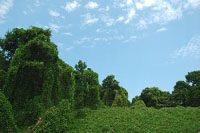
Indigenous to southern and eastern Asia, the semi-woody vine Kudzu was first introduced to the United States as an ornamental vine as well as to control soil erosion. It spread rapidly in the South-eastern US leading to the loss of valuable crop land, and damage to telephone and power lines.
Credit: Danny Hooks- istockphoto.com
The following organizations and bodies are key partners in the implementation of Article 8(h) of the Convention and associated decisions of the Conference of the Parties:
Inter-Agency Liaison Group on Invasive Alien Species
Smithsonian Institution, National Museum of Natural History
CAB International
Convention on International Trade in Endangered Species
Convention on the Conservation of European Wildlife and Natural Habitats (Bern Convention)
Food and Agriculture Organization of the United Nations
Global Invasive Species Information Network
Global Invasive Species Programme
International Civil Aviation Organization
International Maritime Organization
International Plant Protection Convention
IUCN (The World Conservation Union) – Invasive Species Specialist Group
Micronesia Regional Invasive Council
OIE - The World Organization for Animal Health
RAMSAR Convention on Wetlands
The Nature Conservancy
United Nations Environment Programme
World Trade Organization
WTO
The World Trade Organization (WTO) regulates trade between countries through the negotiation of agreements. The WTO Agreement on Sanitary and Phytosanitary Standards (SPS Agreement) sets basic rules in regards to food safety and plant and animal health within the context of international trade.
Feedback
Site Map
Contact us
Terms of Use
Privacy Policy
Credits
© CBD Secretariat
Rate this page