 © UNEP/Kiara Worth
Advancing synergy among MEAs: three highlights from UNEA-7
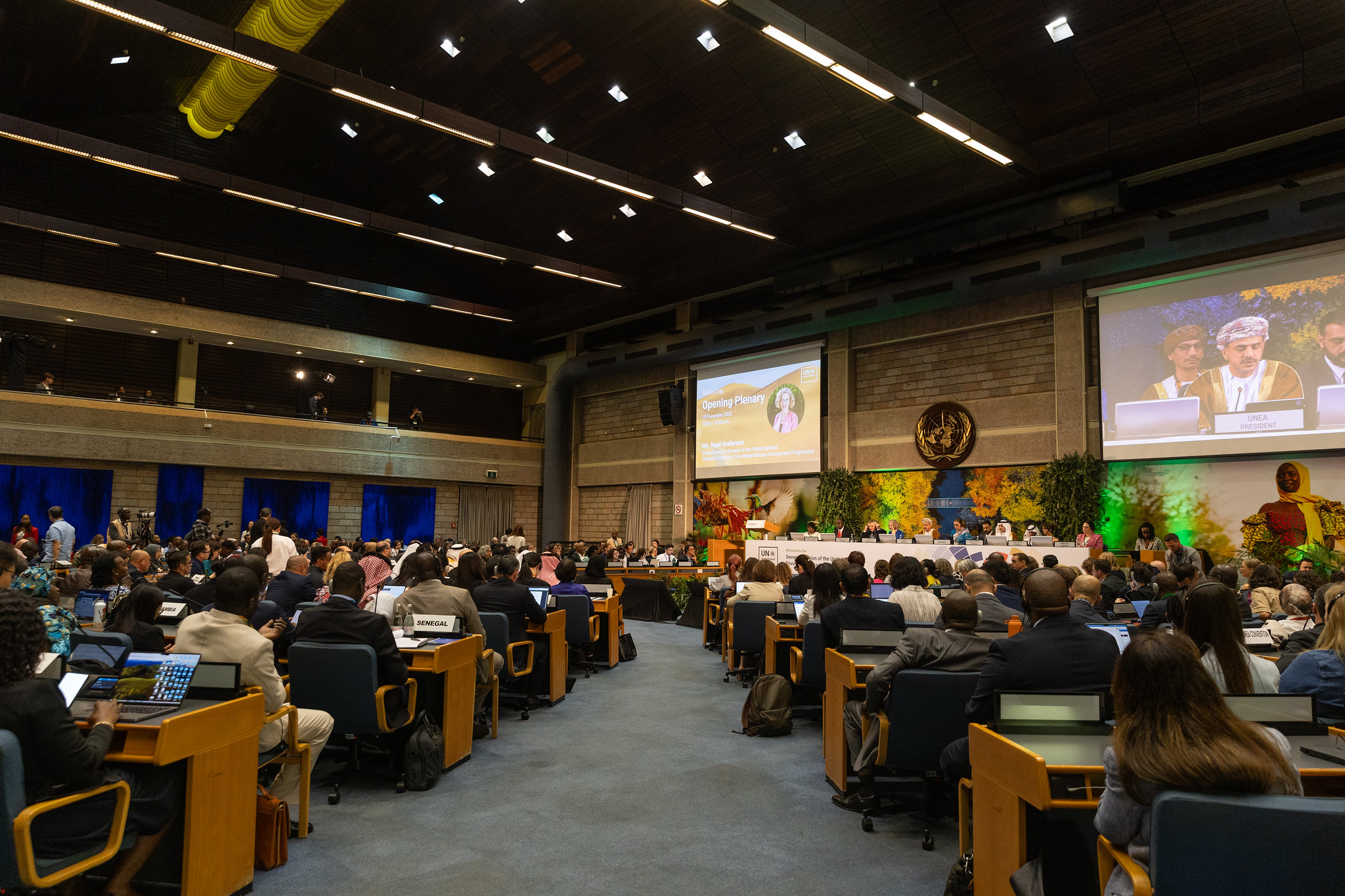
The United Nations Environment Assembly (UNEA) is the world’s most consequential intergovernmental forum dedicated to environmental governance. From 8-12 December 2025, governments and sustainability leaders gathered at UNEA-7 in Nairobi to seek pathways for "Advancing sustainable solutions for a resilient planet”.
With its second edition held on 10 December, MEAs day—a day dedicated to Multilateral Environmental Agreements during UNEA—has established itself as an opportunity for reflection and peer-learning on advancing cohesive delivery. The importance of MEAs Day is set to grow. Suggestions put forward at UNEA-7 include using the day as a forum for voluntary national reviews of the synergistic implementation of MEAs akin to the Voluntary National Reviews conducted at the United Nations High Level Political Forum (HLPF) on Sustainable Development.
The topic of advancing synergies among MEAs featured prominently throughout the week. Here are three highlights from the synergy conversation at UNEA-7:
1. Stubborn silos are hindering governmental action
Nature, like the compounded crisis afflicting it, does not recognize lines of demarcation between ministries. Whole-of-government planning and implementation are essential for the effective implementation of MEAs and associated strategies and action plans. By bringing down silos, governments can bring about the transformative change needed to decouple socio-economic progress from the destruction of nature.
The synergistic implementation of MEAs requires governmental departments and institutions to work as one to—among other pursuits—integrate nature and climate risks in macro-fiscal planning and national public procurement policies, to identify and repurpose environmentally harmful incentives, and to build integrated data systems that enable consistency and accountability.
2. Synergy requires whole-of-society engagement
At UNEA-7, conversations about synergy were punctuated with references to the importance of securing the full engagement of everyone, including indigenous peoples and local communities, civil society, women and youth, scientists and academia, the private sector, faith-based organizations, cities and sub-national actors.
The language adopted within the Kunming-Montreal Global Biodiversity Framework (KMGBF) refers to the importance of the whole-of-society approach. This approach is crucial for the synergistic implementation of national obligations under the CBD and all Multilateral Environmental Agreements, across the biodiversity, climate, land, and pollution agendas.
3. Integrated planning and implementation are gaining traction across the globe
Promising country-led initiatives advancing the synergistic implementation of MEAs were highlighted during UNEA-7. Panama’s “Nature Pledge” brings all policy processes into a single policy document. Rwanda, Costa Rica, Colombia, and Mongolia are aligning NBSAPs, NDCs, and LDN targets, using common baselines, land-cover maps, indicators, and monitoring systems. Kenya and Namibia are embedding ecosystem-based approaches across climate adaptation and rangeland restoration frameworks. Indonesia and Vietnam are operationalising joint forest and wetland actions that deliver mitigation, biodiversity, and land-degradation gains through unified landscape planning.
These initiatives are turning obligations under the tapestry of Multilateral Environmental Agreements into impactful country-driven solutions that also deliver benefits in sustainable economic development, employment and poverty reduction.
Explore this topic further: read the CBD Executive Secretary’s take on the way forward in this LinkedIn post.