 Photo: Corales de Paz
Conservation without borders: a story from the Bio-Bridge Initiative
Off the coasts of Colombia and Ecuador, coral reef ecosystems, like many around the world, are in decline. These fragile but essential reefs form a contiguous ecosystem, making transboundary cooperation essential. Under the impetus of the Bio-Bridge Initiative (BBI) of the Secretariat of the Convention on Biological Diversity (CBD), not-for-profit organizations Corales de Paz (Colombia) and CONMAR (Ecuador) have been joining forces since 2022 to share coral restoration expertise and bolster community-based conservation.
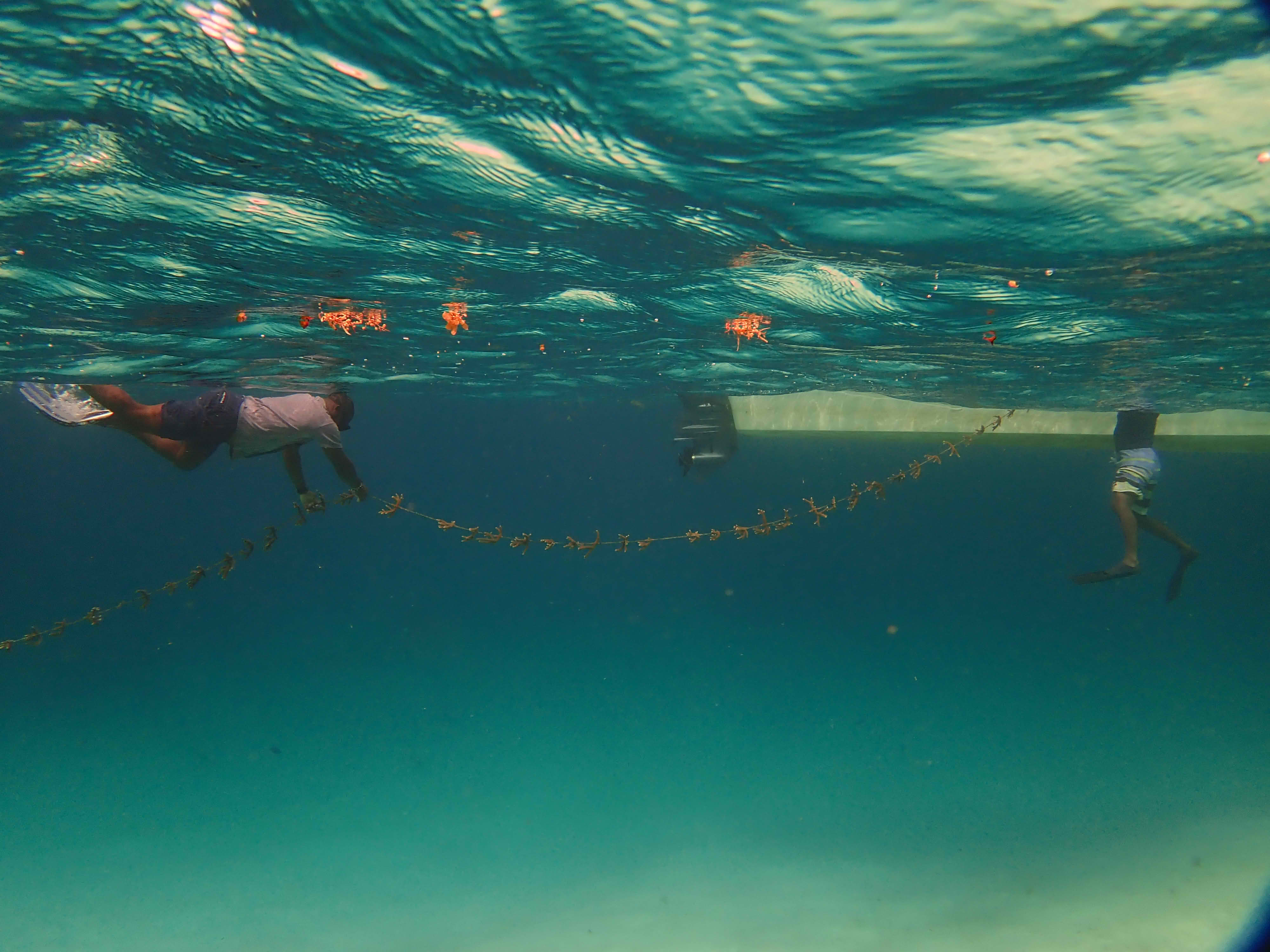
Caribbean specialists from Corales de Paz were able to train CONMAR teams in large-scale reef repair diver techniques and in building horizontal rope nurseries — structures nurturing thousands of coral fragments. Conversely, CONMAR shared with Corales de Paz colleagues its methods adapted to Pacific conditions, including coral tree nurseries capable of withstanding strong currents. Nine trainees from both countries received certification as restoration divers.
Both Corales de Paz and CONMAR are certified “Reef Check protocol” implementers. The Reef Check Foundation introduced this protocol in 1996 in a bid to enhance the assessment of the health of coral reefs. With BBI further catalyzing knowledge exchange between the two organizations, the collaboration went deeper.
BBI has helped the two organizations foster the participation of coastal communities along the vibrant coastlines of Colombia and Ecuador. Several former fishermen-turned-coral gardeners have contributed a wealth of local knowledge. Their observations of changes affecting coral reefs over the years are feeding into efforts to strengthen coastal resilience.
It is estimated that the teams in both countries cultivated 43,000 corals across nurseries, achieving remarkable survival rates between 85-92 per cent. In Ecuador’s Machalilla National Park, CONMAR outplanted 4,100 corals using star-shaped frames, repopulating 120 square meters of reef with a success rate of 95 per cent.
The transboundary collaboration's benefits continue to blossom. Inspired by Ecuador's reef-star innovation — a technique utilizing star-shaped metal frames that stabilize coral rubble and provide a stable base for new coral growth — Corales de Paz is deploying rubble-stabilizing technology for the first time in Colombia. Plans are underway to certify CONMAR in the technique, expanding its impact along the Pacific coast of Ecuador.
Both teams are now pursuing an ambitious vision: a Pan-Pacific conservation belt. They are actively seeking funding to scale restoration, adapt methods for regional conditions, and publish their findings for wider adoption.
Forming part of the mosaic of actions undertaken within the framework of the UN Decade on Ecosystem Restoration, this collaboration also contributes to the implementation of Target 2 of the Kunming-Montreal Global Biodiversity Framework (KMGBF).


