 Photo: © UNEP/Kiara Worth
Armenia unveils the logo of the 2026 UN Biodiversity Conference
Armenia, the elected host of the 2026 United Nations Biodiversity Conference, has unveiled the logo and slogan of COP 17 at an event held on the sidelines of the seventh session of the United Nations Environment Assembly (UNEA-7).
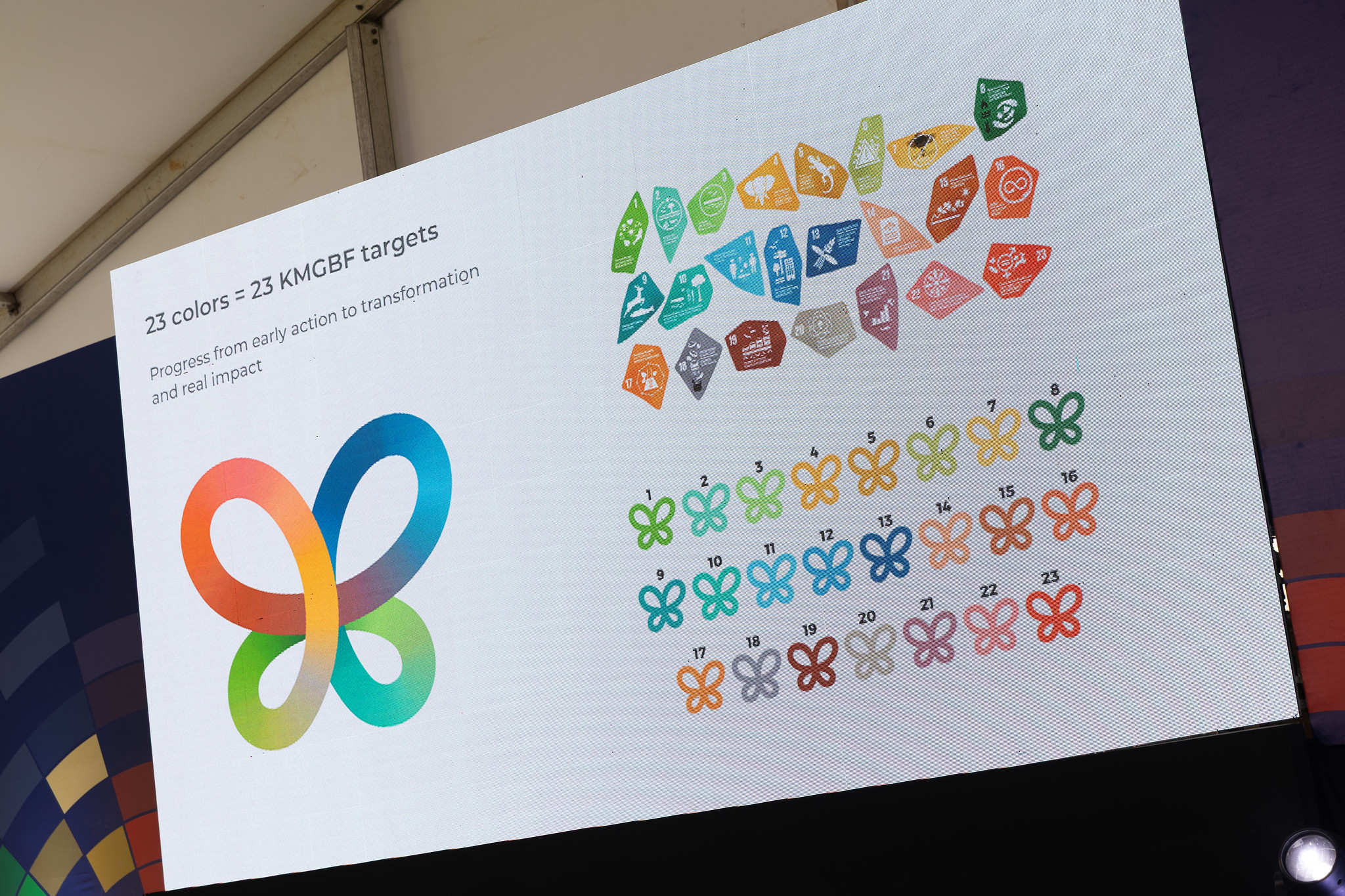
Inspired from Polyommatus eriwanensis, a butterfly species endemic to Armenia, the logo’s colour palette draws on the visual identity of the Kunming-Montreal Global Biodiversity Framework (KMGBF) and its 23 action targets. Blending the 23 icons, the COP 17 logo symbolizes the interconnectedness of the targets of the Global Biodiversity Framework as an indivisible whole.

“Taking action for nature”—the slogan unveiled alongside the logo— conveys Armenia’s aspirations for an action-oriented UN Biodiversity Conference. In Yerevan, the Parties to the CBD will undertake the first global review of collective progress in the implementation of the KMGBF. The global review is expected to guide accelerated implementation.
“Armenia’s vision for COP17 is a beautiful one. It aims to inspire us all to see that transformation is possible, that nature is worth protecting, that implementation is happening and that we all have an important and active role to play,” said Astrid Schomaker, the Executive Secretary of the CBD, at the unveiling event.
COP 17 will take place from 19-30 October 2026. Here are three messages that the thought-provoking iconography suggests:
1. Harmony with nature
The butterfly species depicted in the logo flutters in and around the capital city of Armenia—hence the “eriwanensis” reference in its taxonomic name. The fact that the “blue butterfly”, as it is known locally, thrives around people makes it a fitting symbol for living in harmony with nature—the vision universally adopted within the KMGBF.
2. Transformative change
Butterflies are the embodiment of transformative change: from caterpillar to chrysalis to winged adult. Their awe-inspiring metamorphosis serves as inspiration for the required transformative change that must occur across socio-economic systems in order to decouple human progress from the destruction of nature.
3. Every action matters
The “blue butterfly” may be tiny, but it forms part of a larger ecosystem that thrives thanks to all its components. Similarly, every action for nature, no matter how small, matters. Taking action for nature includes contributions from a wide range of actors other than national governments, including members of civil society and youth, as well as businesses, and local authorities and cities. The combination of their efforts gives biodiversity action wings.
Logo assets can be found on the COP 17 Media webpage