 UN Photo/Mark Garten
Implementing the Solutions
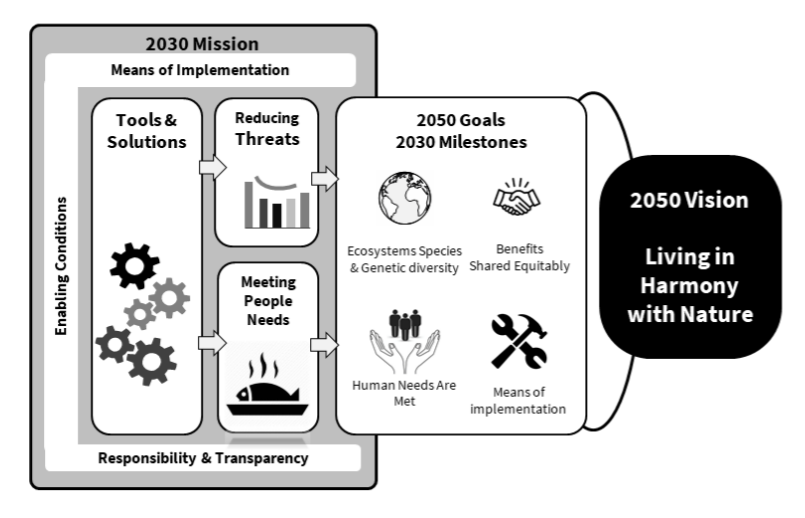
Transformative change is the promise of the post-2020 global biodiversity framework to be adopted at the UN Biodiversity Conference (COP 15) in October. To be successful, Parties have noted that the framework must establish not only ambitious goals and targets but also a clear path for how to achieve them.
Means of Implementation
The zero draft of the post-2020 framework presents a theory of change that requires Parties to put in place “adequate means of implementation, including financial resources, capacity and technology.” It calls for global cooperation to create an enabling environment for action on a short timescale and involving a wide range of actors at all levels and across all sectors of society. The draft framework also emphasizes the need for transparency and accountability in monitoring progress.
“The development of a review, monitoring and reporting mechanism, and strategy for resource mobilization, as well as a long-term strategic plan on capacity building and technology transfer” are also essential elements under discussion, CBD Executive Secretary Elizabeth Maruma Mrema wrote in Environmental Policy and Law. “Devoid of such elements, it may be difficult to give effect to the implementation of the proposed new post-2020 global biodiversity framework.”
Mobilizing sufficient resources
Global Biodiversity Outlook 5 (GBO 5) estimates that overall investment in biodiversity amounts to about US$78 billion to 91 billion per year. The figure is dwarfed by the $500 billion governments spend on subsidies and other supports to industries that may be harmful to biodiversity.
The draft post-2020 framework calls for an increase in financial resources allocated to biodiversity action from international and domestic sources and from both the public and private sectors. More effective use of existing funds is key, including reducing perverse incentives by redirecting resources spent on activities causing harm to biodiversity.
| “Effective resource mobilization requires transformative, inclusive and equitable change across economies and society.” – Draft post-2020 global biodiversity framework |
Building capacity
The draft framework identities capacity development as another critical implementation support mechanism. It highlights the need to build capacity among individuals and institutions, particularly in developing countries and countries with economies in transition.
Working together on actions to reduce biodiversity loss will require support to government and non-government actors at all levels. Policy formulation, biodiversity mainstreaming and establishing systems of monitoring and reporting are listed among key areas for capacity development.
Sharing knowledge and technology
Generating, managing and sharing information and data will also be crucial in implementing the post-2020 biodiversity framework. The updated zero draft notes that biodiversity planning, policy development and decision-making must be supported by:
- greater protection of traditional knowledge and recognition of its contributions to conservation and sustainable use of biodiversity;
- promotion of biodiversity science and education and organizational learning.
To ensure that innovations can be shared widely and quickly, the draft framework calls for increased scientific cooperation and technology transfer, emphasizing the importance of cooperation amongst developing countries as well as with developed countries.
Learning from the past
GBO 5 findings show that progress on the Aichi Biodiversity Targets was delayed as countries worked to put in place financial and other resources to operationalize the Strategic Plan for Biodiversity 2011-2020. By prioritizing means of implementation during the development of the post-2020 framework, CBD Parties seek to avoid a similar time lag in moving the new agreement from framework to action.
| “The tools for the means of implementation are already being thought through as the framework is being developed, which was not the case 10 years ago, and is one of the major lessons we learned.” – Elizabeth Maruma Mrema, CBD Executive Secretary |
More information:
Updated zero draft of the post-2020 global biodiversity framework
Global Biodiversity Outlook 5
Draft long-term strategic framework for capacity development
Technology transfer
Workshop: The financial sector and the post-2020 global biodiversity framework
Preparations for the Post-2020 Biodiversity Framework