| ID | 4561 | 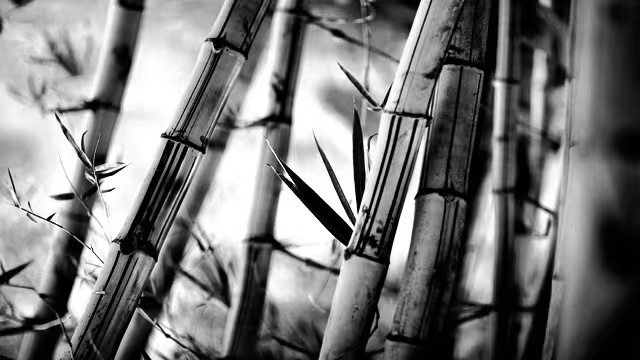 |
|||||||||||||||||||||||||||
|---|---|---|---|---|---|---|---|---|---|---|---|---|---|---|---|---|---|---|---|---|---|---|---|---|---|---|---|---|---|
| Date |
Saturday 2022.12.17 @ 18:15 Add to Calendar |
||||||||||||||||||||||||||||
| Room | Yellow 513A Capacity: 61 people |
||||||||||||||||||||||||||||
| Conference | WG2020-5 / COP-15 / CP-MOP-10 / NP-MOP-4 |
||||||||||||||||||||||||||||
| Meetings(s) | COP-15 Fifteenth meeting of the Conference of the Parties to the Convention on Biological Diversity (Part Two) |
||||||||||||||||||||||||||||
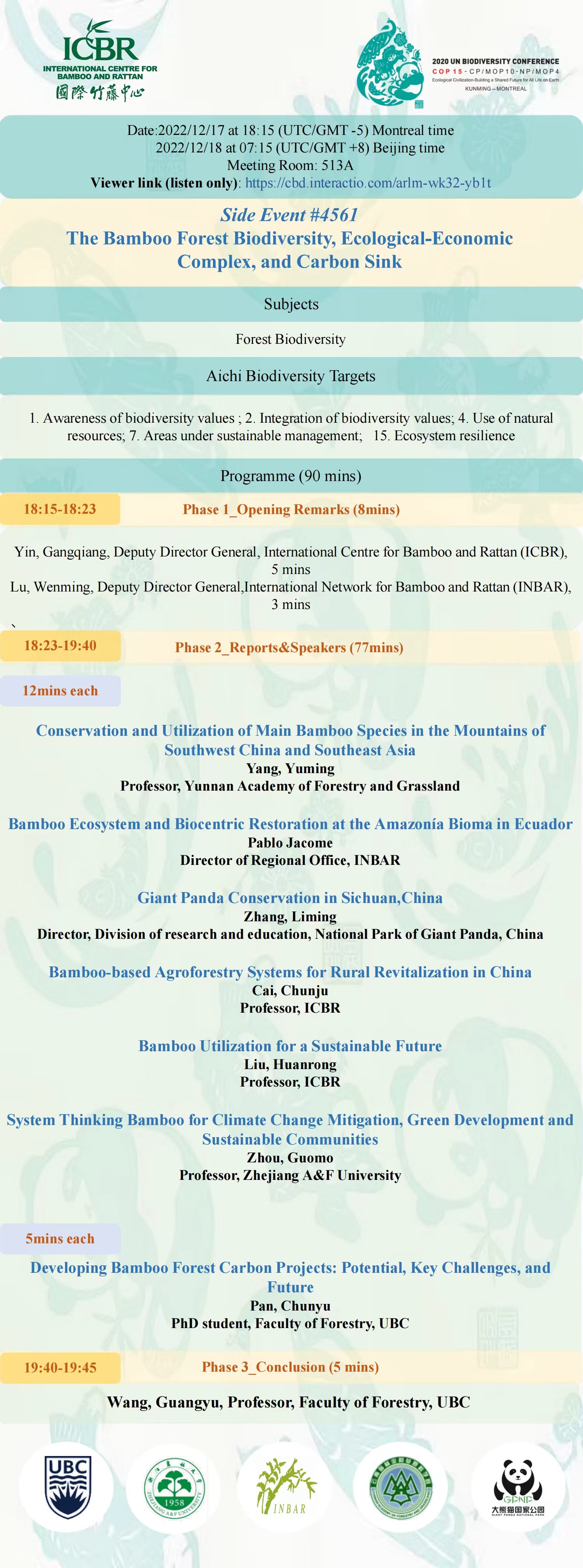
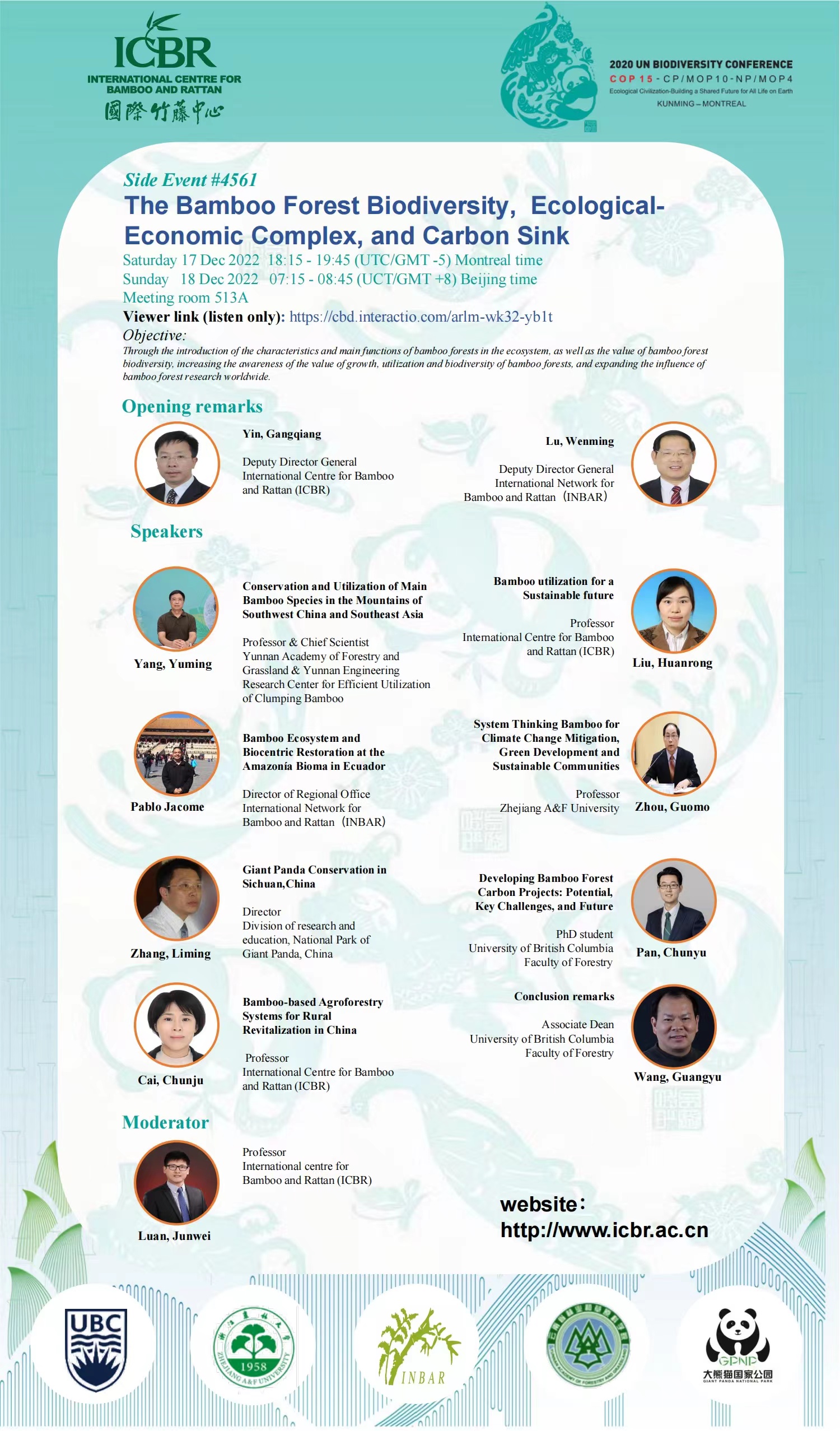
| Title | The Bamboo Forest Biodiversity, Ecological-Economic Complex, and Carbon Sink | ||||||||||||||||||||||||||||
| Hosts |
ICBR |
|
||||||||||||||||||||||||||||
| Aichi Biodiversity Targets | |||||||||||||||||||||||||||||
|
|
|||||||||||||||||||||||||||||
|
Bamboo (Bambusoideae) is a group of fast-growing species from the subfamily Bambusoideae of the grass family Poaceae, with 1,642 species worldwide. In bamboo forests, trees, shrubs, grasses and animals co-exist in harmony, seeking the best carbon sink function and maximum economic value. Bamboo trees can be harvested at 3-5 years of age and has a high carbon sequestration capacity. However, it will be degraded if it is not harvested for more than 10 years. Therefore, bamboo forests should be harvested regularly to meet the demand for timber and to increase carbon sequestration. Bamboo is not only suitable as a food source, but under the bamboo forest ecosystem , edible fungi, Chinese herbs and poultry such as chickens and ducks can be grown, providing abundant food for human beings and alleviating poverty. Bamboo forest ecosystem is harmonious and balanced, and the role of bamboo forest in material, water, economy, food and carbon sink can fully embody the comprehensive functions of water reservoir, money reservoir, food reservoir and carbon reservoir.
Error as occured...
Error as occured...
Error as occured...
Error as occured...
|
|||||||||||||||||||||||||||||
| Documents |
|
||||||||||||||||||||||||||||


 AICHI-TARGET-01
 AICHI-TARGET-02
 AICHI-TARGET-04
 AICHI-TARGET-07
 AICHI-TARGET-15