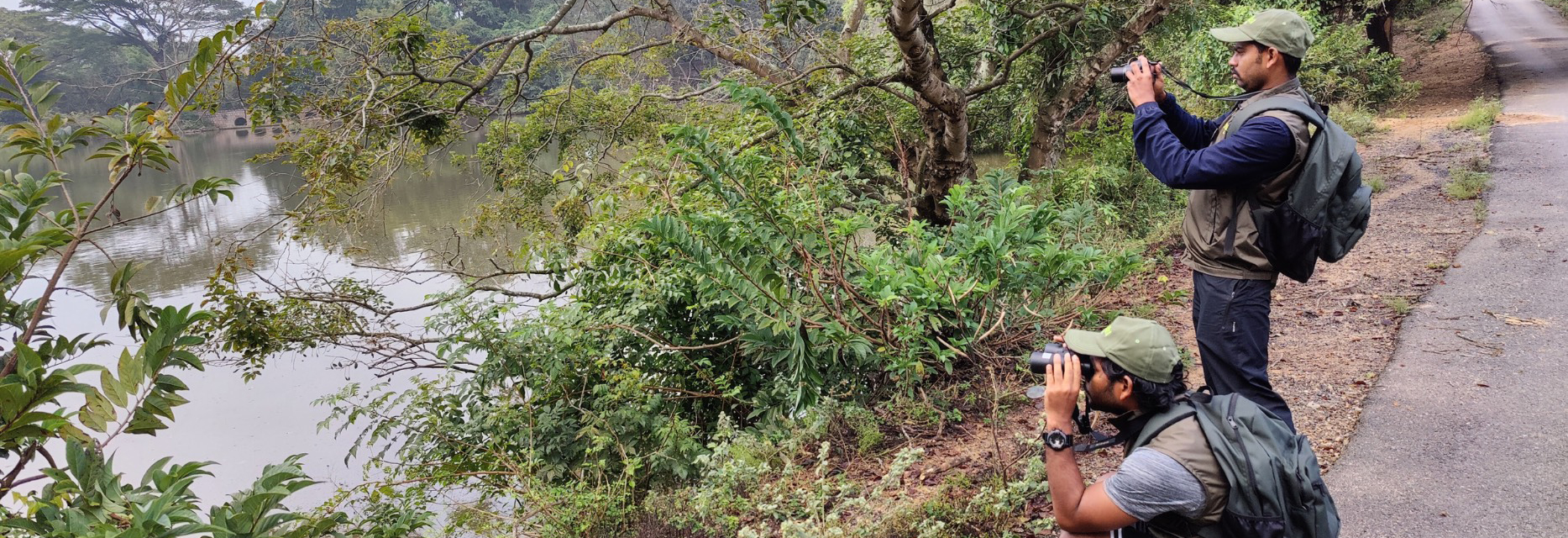
As Parties take stock of progress on implementing the Kunming-Montreal Global Biodiversity Framework (KM-GBF), a critical question remains: how can countries generate the volume, frequency and geographic coverage of biodiversity data needed to support implementation and reporting? Assessments of the KM-GBF Monitoring Framework indicate that around half of its 365 indicators could benefit from citizen involvement in data collection, while nearly one-third are well suited to citizen and community participation in both data collection and analysis. Yet citizen-generated data remains far from fully integrated into national monitoring systems, NBSAPs and national reports.
This side event will present a forward-looking vision of next-generation citizen science—not simply as volunteer biodiversity monitoring, but as an increasingly robust, inclusive and scalable component of the global biodiversity data ecosystem. Drawing on perspectives from global citizen science networks, research institutions, international organizations, Global South practitioners and civil society, the discussion will explore how citizen-generated data can strengthen implementation of the KM-GBF while broadening participation in biodiversity governance.
The session will focus on:
Showcasing conservation outcomes: Present compelling examples where citizen-generated data has informed biodiversity mapping, invasive alien species surveillance, protected and conserved area management, ecological restoration and evidence-based policy and management decisions relevant to KM-GBF implementation.
Citizen science as a data lifeline for the Global South: Examine how community-based monitoring, low-cost digital technologies and participatory approaches are helping address persistent biodiversity data gaps, complement limited scientific infrastructure and strengthen national monitoring and reporting in many developing countries.
Inclusive monitoring, stronger governance: Highlight how women, youth, Indigenous Peoples and local communities and other underrepresented groups are expanding the reach, quality and legitimacy of biodiversity monitoring, while exploring approaches to data governance that recognize community knowledge, participation and rights.
From community observations to national reporting: Identify the institutional, technical, validation and policy pathways needed to enable trusted citizen-generated data to contribute more systematically to national monitoring systems, NBSAP implementation and reporting under the KM-GBF.
Charting the next frontier of citizen science: Explore how advances in digital technologies, artificial intelligence and participatory monitoring are expanding the scope of citizen science beyond biodiversity observation to support urban biodiversity planning, ecosystem restoration, climate adaptation, supply-chain transparency and wider environmental governance.
Rather than asking whether citizen science has a role in implementing the KM-GBF, this session asks how governments, research institutions and communities can work together to realize its full potential as part of an inclusive, trusted and scalable biodiversity monitoring system.
Co-Facilitators:
Ram Dayal Vaishnav - Head of Citizen Science at The Naturalist School
Anukriti Sharma - Co-chair, IUCN Citizen Science Task Force
Speakers:
Austin Mast - Chair of CSGP Board & Professor at Florida State University
Martin Brocklehurst - EU Climate Pact Ambassador & CSGP Board Member
Garabet Kazanjian - American University Armenia
Fatima El-aaraby - CBD Women’s Caucus Project officer
Giulia Marzetti - EU Climate pact ambassador & EU Youth Energy Ambassador
Pablo López Guijosa - Urban Biodiversity Hub