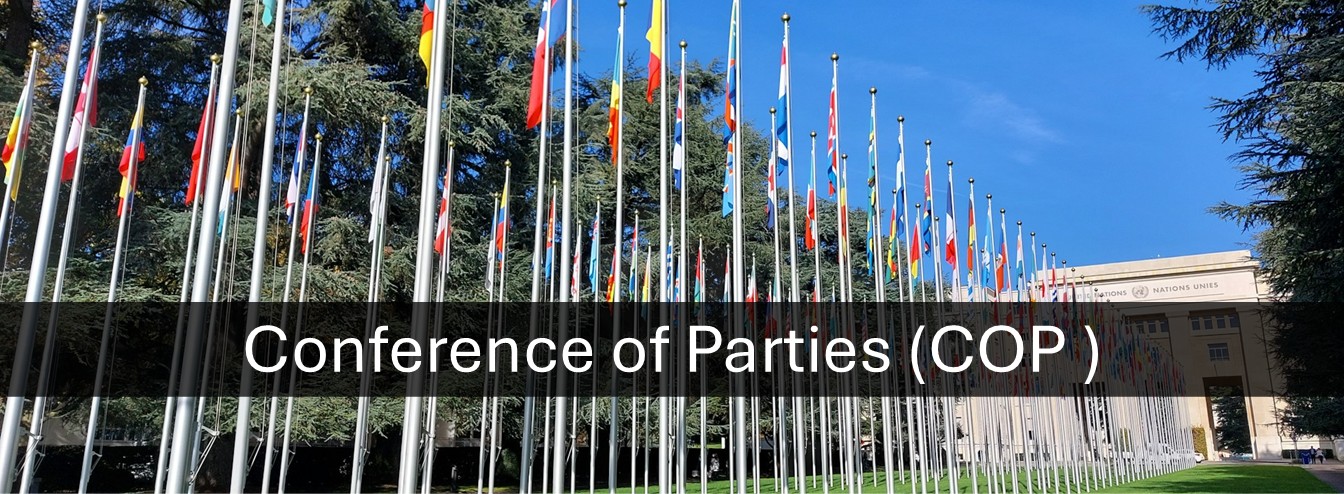
Conference of the Parties (COP)
The Conference of the Parties is the governing body of the Convention, and advances implementation of the Convention through the decisions it takes at its periodic meetings.
To date the Conference of the Parties has held 16 ordinary meetings and two extraordinary meetings. From 1994 to 1996, the Conference of the Parties held its ordinary meetings annually. Following a change in the rules of procedure in 2000, these meetings are being held every two years.
The Seventeenth meeting of the Conference of the Parties will be held in Yerevan, Armenia.
Meetings of the Conference of the Parties
The agenda of the meetings of the Conference of the Parties is very wide-ranging, reflecting the programme of work the Conference of the Parties has established for itself. At its first meeting, the Conference of the Parties decided on a medium-term programme of work for the period 1995-1997. Implementation of this programme has laid the groundwork for the long-term implementation of the Convention itself. In particular it has seen the development of a number of thematic work programmes, and identified a series of key cross-cutting issues relevant to all work programmes.
The fourth meeting of the Conference of the Parties established a programme of work to cover the period from then until the seventh meeting and, more importantly, established a process to review the operations of the Convention and set out a longer term programme of work. As part of this process, an intersessional meeting on the operations of the Convention was held in 1999, the results of which were reported to the fifth meeting of the Conference of the Parties and formed the basis for a decision on future operations of the Convention.
Major themes at meetings of the Conference of the Parties
| First ordinary meeting | Guidance to the financial mechanism; Medium-term programme of work; |
| Second ordinary meeting | Marine and coastal biological diversity; Access to genetic resources; Conservation and sustainable use of biological diversity; Biosafety; |
| Third ordinary meeting | Agricultural biodiversity; Financial resources and mechanism; Identification, monitoring and assessment; Intellectual property rights; |
| Fourth ordinary meeting | Inland water ecosystems; Review of the operations of the Convention; Article 8(j) and related issues (traditional knowledge); Benefit sharing; |
| Fifth ordinary meeting | Dryland, mediterranean, arid, semi-arid, grassland and savannah ecosystems; Sustainable use, including tourism; Access to genetic resources; |
| Sixth ordinary meeting | Forest ecosystems; Alien species; Benefit-sharing; Strategic plan 2002-2010; |
| Seventh ordinary meeting | Mountain ecosystems; Protected areas; Transfer of technology and technology cooperation. |
| Eighth ordinary meeting | Island biodiversity; Biological diversity of dry and sub-humid lands; Global Taxonomy Initiative; Access and benefit-sharing (Article 15); Article 8(j) and related provisions; Communication, education and public awareness (Article 13). |
| Ninth ordinary meeting | Agricultural biodiversity; Global Strategy for Plant Conservation; Invasive alien species; Forest biodiversity; Incentive measures; Ecosystem approach; Progress in the implementation of the Strategic Plan and progress towards the 2010 traget and relevant Millennium Development Goals; Financial resources and the financial mechanism. |
COP also sets out a series of standing items for the provisional agenda of its meetings, namely:
- Organizational matters;
- Reports from subsidiary bodies, the financial mechanism and the Executive Secretary;
- Review of the implementation of the programme of work;
- Priority issues for review and guidance; and
- Other matters.